NASA's Perseverance rover could provide key evidence of extraterrestrial life. To fulfill its mission, it must traverse vast terrain autonomously at times. Here's how engineers drive it on Mars.
In less than two months, NASA's Perseverance rover will touch down in Jezero Crater on Mars. Its mission: analyze the planet's geological history and habitability potential through targeted experiments and mobility. Operating such a rover on Mars, however, presents unique engineering challenges.
NASA engineer Evan Hilgemann, who recently joined the Curiosity rover team—active since 2012—explains the process in a detailed post. His team prioritizes avoiding obstacles that could damage the suspension or wheels. Curiosity handles small boulders up to a few centimeters, but "larger ones must be avoided." Soft terrain that risks bogging down the rover is another hazard.
Perseverance must dodge these too, but its upgraded wheels—machined from aircraft-grade aluminum with titanium spokes—are larger, thicker, and redesigned with better treads, addressing Curiosity's wear from sharp rocks.
With signals taking about 22 minutes one-way between Earth and Mars, rovers rely on pre-planned commands and onboard autonomy. As Hilgemann notes, "most activities are scripted and planned on Earth."
Perseverance's 3D "navcams" capture its surroundings, enabling ground teams to virtually model the terrain. Engineers assess obstacles, ensure clear Earth communication lines, then upload hundreds of code lines. A typical drive demands 3-5 hours of planning.
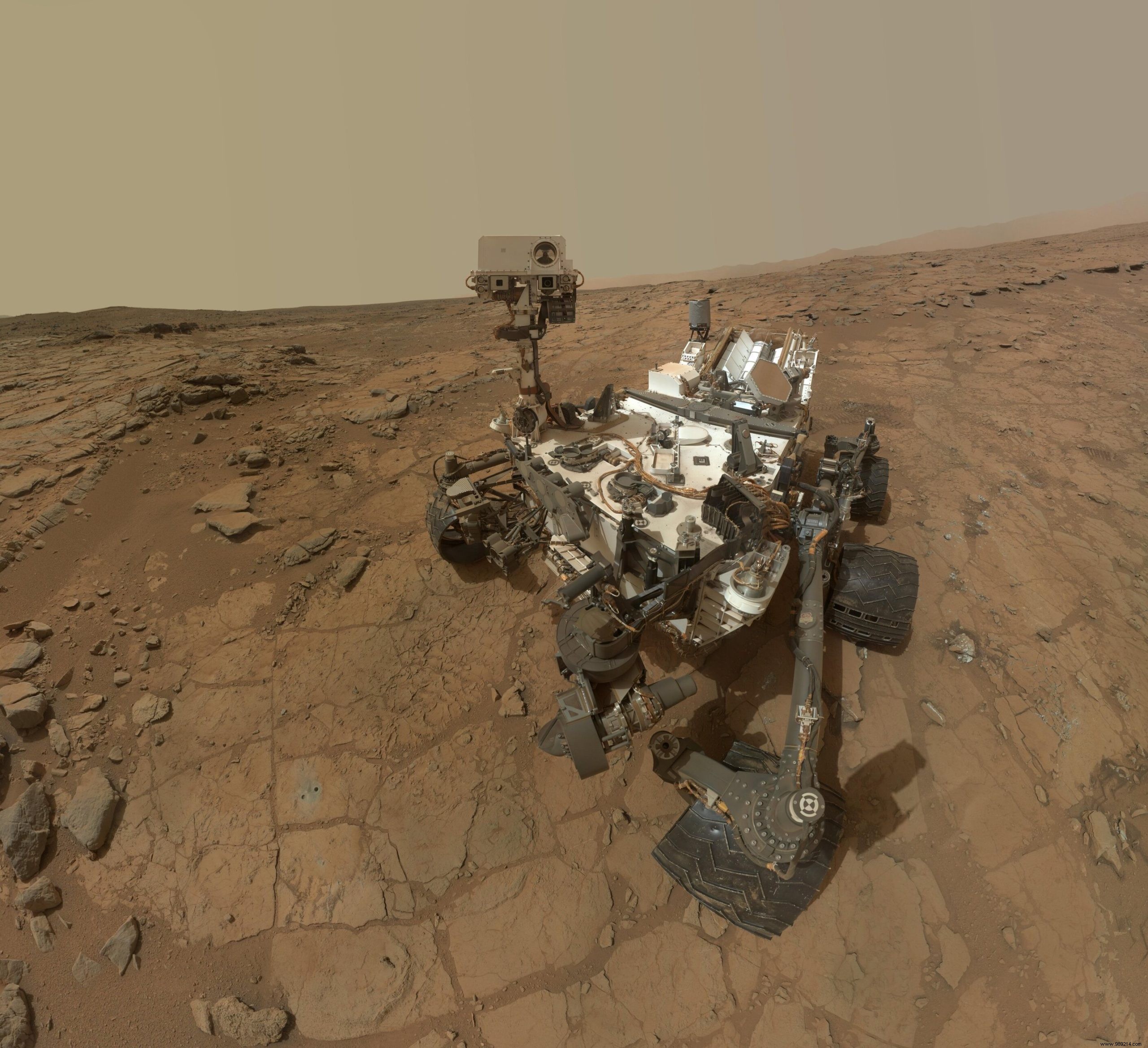
Visual odometry lets Perseverance pause every meter or so, snap images, and decide to proceed. Its advanced "autonav" mode enables fully autonomous driving, like a self-driving car on Mars.
Hilgemann explains that "autonav requires frequent stops for imaging and analysis, making it the slowest mode." Curiosity covers just 30 meters per hour in autonav, but Perseverance—powered by enhanced computing and algorithms—will drive at least twice as fast.
In the meantime, Perseverance faces its dramatic touchdown. This NASA video outlines the seven-minute descent: At 21 meters altitude, three 7.5-meter cables lower the rover, wheels deployed. Sensors detect slack, triggering pyrotechnic release. The descent stage then maneuvers away, at least 150 meters from the site.
