One month after its successful landing, NASA's Perseverance rover has passed all checks, capturing historic audio of its Martian drive. The team now prepares Ingenuity for the first powered flight on another world.
On February 18, 2021, Perseverance touched down smoothly in Jezero Crater. Over the initial weeks, NASA's Jet Propulsion Laboratory (JPL) team verified the rover's seven scientific instruments and subsystems, confirming optimal performance.
“So far so good,” said Ken Farley of JPL on Tuesday. “We haven't had any major technical issues.”
Among the mission's early achievements: recording the rover's sounds as it navigates the planet's surface—a world first.
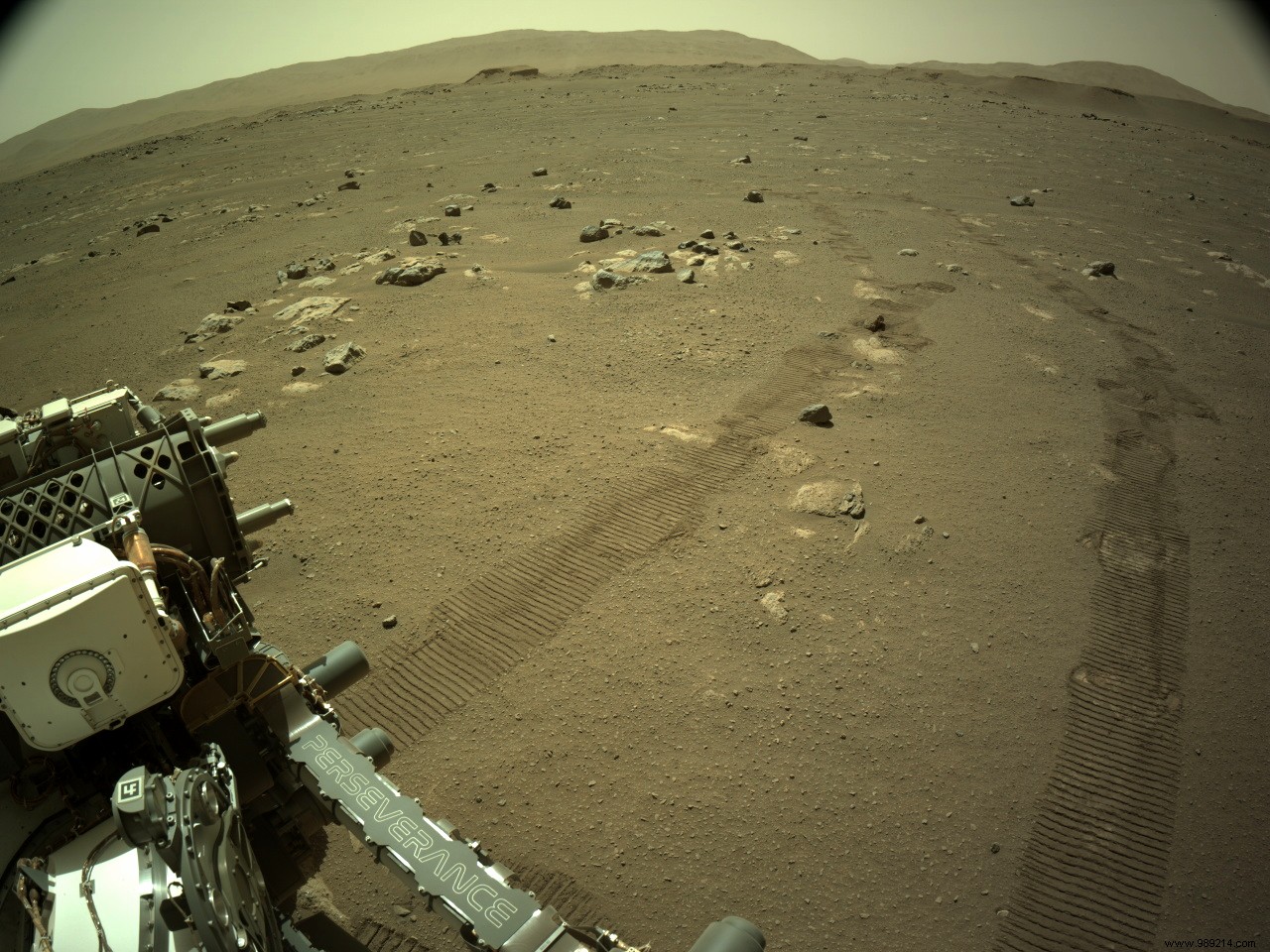
The audio captures a 27.3-meter drive on March 7, featuring the squeaks and rattles of its six metal wheels over rocky soil.
“A lot of people, when they see the pictures, don't realize that the wheels are metal,” explains Vandi Verma, principal engineer and rover driver at JPL. “When you drive with these wheels on rocks, it's actually very noisy.”
The next milestone: deploying the Ingenuity rotorcraft, still attached to the rover. The team has identified an ideal “aerodrome.”
On launch day, the 1.8 kg helicopter will spin its blades at nearly 2,900 rpm, aiming to hover 3 meters high for about 30 seconds—marking the first powered flight on another planet.
Perseverance will observe from a safe distance using its Mastcam-Z camera. “We plan to use our video capability and our telephoto capability,” said Jim Bell of Arizona State University. “It will be very exciting and we look forward to these historic films.”
The rover's two onboard microphones will also record the flight audio.
Meanwhile, the team recently charged Ingenuity's six lithium-ion batteries to 30% capacity to keep it warm, with weekly sessions planned until deployment.
Post-flight, Perseverance will focus on seeking signs of ancient life in Jezero Crater, a 45 km-wide site that held a vast lake and river delta 3-4 billion years ago.
The route targets the preserved delta for potential fossils. Samples will be cached for return to Earth in the 2030s via a NASA-ESA collaboration.
JPL has already shared more than 10,000 photos from the rover—browse them here. Enjoy!
