As NASA's Perseverance rover gears up for its historic Mars landing, its identical Earth twin, Optimism, allows engineers to perfect critical operations right here on our planet.
Launched on July 30 as part of the Mars 2020 mission, Perseverance is set to touch down in the Jezero crater on February 18, 2021. The rover's primary goals include hunting for signs of ancient microbial life, collecting sealed samples for potential return to Earth, and testing the innovative Ingenuity helicopter.
While Perseverance hurtles toward the Red Planet, NASA teams are honing their skills with Optimism, built on the exact same chassis. This duplicate rover enables rigorous testing of commands and software updates before transmission to Mars.
Optimism rolled into NASA's Jet Propulsion Laboratory (JPL) in Pasadena, California, at the end of August, acing its first mobility test on September 1. Now positioned in the 20-square-meter "Mars Yard"—a realistic simulated Martian terrain—it shares space with Maggie, the Earth twin of the active Curiosity rover.
“The Curiosity mission drew invaluable lessons from Maggie that couldn't have been learned any other way,” notes NASA engineer Matt Stumbo. “With Optimism, Perseverance gains the same edge to ensure mission success on Mars.”
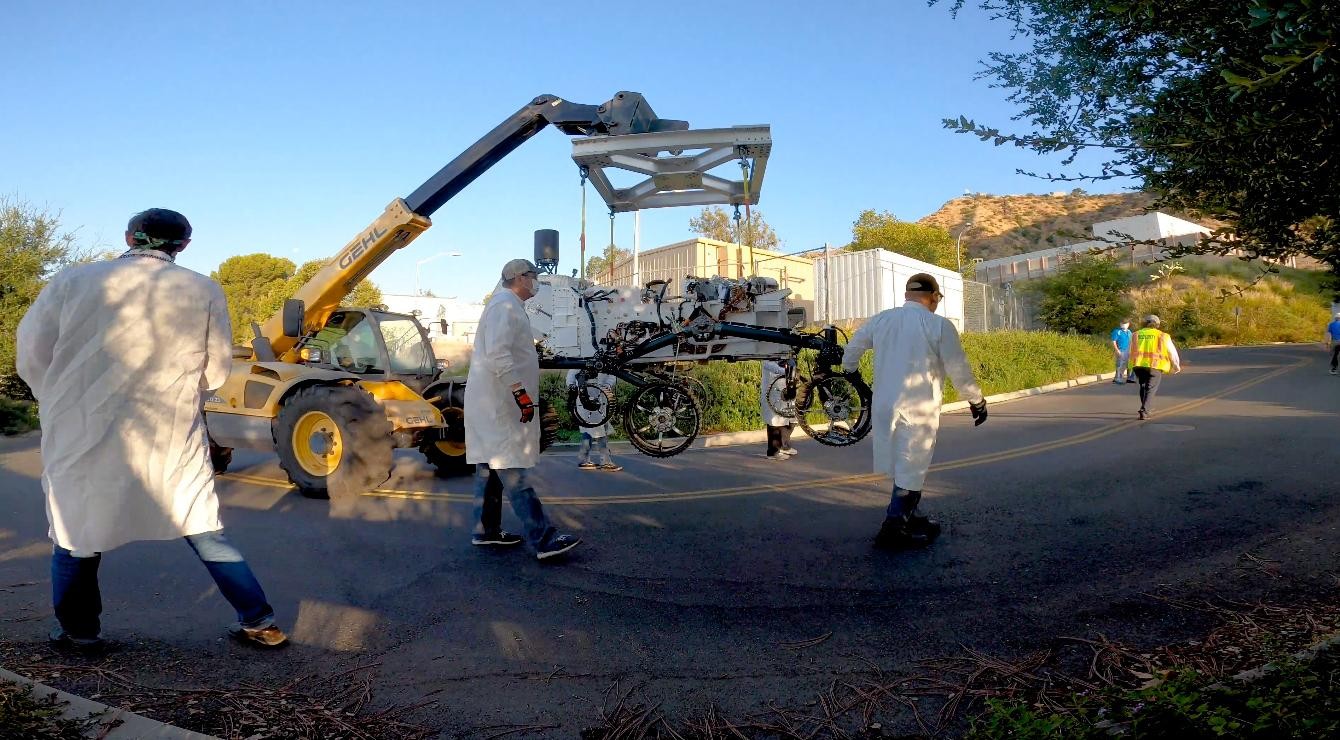
Though strikingly similar, Optimism and Perseverance aren't exact replicas—just like Maggie and Curiosity. Key differences lie in the wheels, optimized for each planet's gravity. Optimism currently lacks Perseverance's full suite of instruments, cameras, and sample-collection system, which will be installed early next year.

Excitement builds for Perseverance's landing. NASA will stream live coverage on its website starting at 2:15 p.m. ET (8:15 p.m. French time). French speakers can tune into the Astro Alex YouTube channel—the Espace &Aéro Channel—from 8 p.m.
