Following Starship's landmark first test flight in 2020—SpaceX's fully reusable interplanetary spacecraft—Elon Musk vows to ramp up testing dramatically starting in 2021. The first Super Heavy booster prototype will soon join the efforts.
SpaceX plans to intensify its Starship program next year. In a recent Twitter post, Elon Musk noted the company will leverage both launch pads at Boca Chica, Texas, with prototypes on each. The Super Heavy booster, tasked with launching Starship to orbit, will start tests "in a few months," he confirmed.
SN9 could fly soon—it moved to the pad on December 24. Expect a streamlined regimen versus SN8: one cryogenic test (liquid nitrogen tanking) and three static fires. Success plus FAA approval could enable a flight by year-end or early 2021.
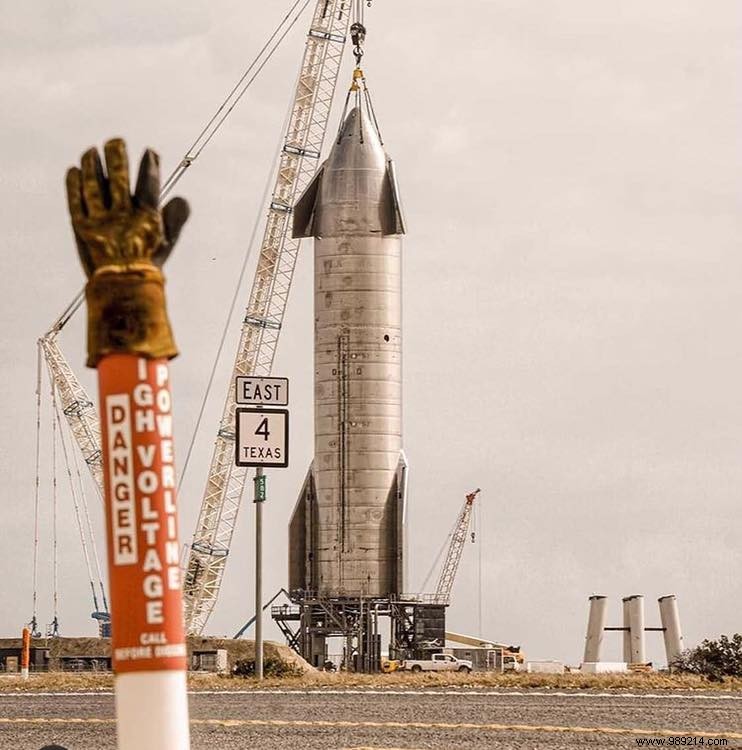
Mirroring SN8, SN9 targets 12.5 km altitude. It will reenter at 70-80 degrees angle-of-attack to decelerate, then use reaction control thrusters for a "belly flop" to upright for landing.
SN10 now sports its nose and fins; later prototypes are assembling. Dual pads and vehicles enable rapid iterations toward a 200 km suborbital test in 2021.

Super Heavy's initial tests herald big 2021 milestones. This booster will loft Starship from Earth.
The prototype in build starts with two Raptor engines, scaling to over 70 meters tall with 28 Raptors for gravity-defying thrust.
