Tiny extraterrestrial particles dominate the annual influx of cosmic material to Earth's surface, making them notoriously hard to detect. To precisely measure their distribution and volume, a team of expert researchers journeyed to Antarctica.
Earth is constantly showered with alien matter—minuscule cosmic particles indistinguishable from the 17 million metric tons of terrestrial dust traversing our atmosphere daily. These stealthy visitors often go unnoticed, complicating efforts to quantify their contribution.
Such insights are invaluable for unraveling how cosmic dust delivered essential water and carbon molecules to the young Earth, ultimately enabling the emergence of life.
Scientists from CNRS, Université Paris-Saclay, and France's Muséum National d'Histoire Naturelle targeted Antarctica near the Franco-Italian Concordia station (Dome C), roughly 1,100 kilometers from Adélie Land. Here, terrestrial dust is scarce, and snow accumulation is minimal, offering ideal conditions for accurate collection and exposure control.

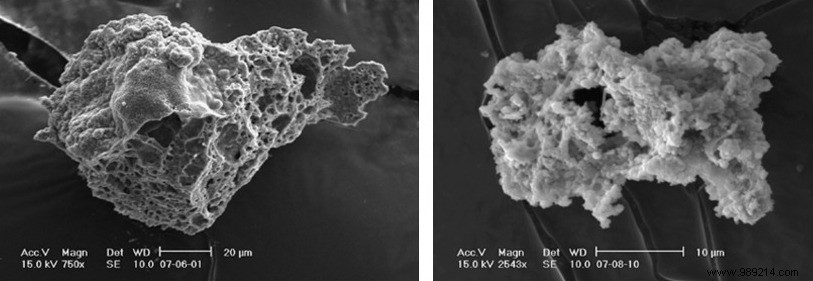
Over nearly two decades, six expeditions collected and analyzed 1,280 unmelted micrometeorites and 808 cosmic spherules—fused space rocks—each under 350 micrograms. These findings enabled global extrapolations, revealing that about 1,600 tons of micrometeorites and 3,600 tons of cosmic spherules reach Earth's surface yearly, totaling 5,200 tons. For context, larger meteorites contribute less than 10 tons annually.
Detailed grain analysis pinpointed origins: lower density and higher porosity signal cometary sources, while higher density and lower porosity point to asteroids. In this pristine sample, 80% derives from comets, the rest from asteroids.
Findings are detailed in Earth and Planetary Science Letters.
