Astronomers harnessed two of the world's largest radio telescopes to scrutinize the enigmatic 'colors' of a fast radio burst (FRB), advancing our understanding of these cosmic signals' origins.
Fast radio bursts (FRBs) rank among the universe's most powerful explosions. Lasting mere milliseconds, they release energy equivalent to 500 million suns, with thousands traversing the cosmos daily and some reaching Earth. Yet their precise sources remain elusive.
Invisible to the human eye, FRBs emit solely in radio wavelengths beyond the visible spectrum. Observations reveal variations: shorter wavelengths appear 'bluish' to radio telescopes, while longer ones seem 'reddish.'
In a study published in Nature, University of Amsterdam researchers examined the radio 'colors' of repeating FRB source 20180916B, which pulses toward Earth every 16.3 days for about five days, followed by silence before repeating. They used the Netherlands-based Low Frequency Array (LOFAR) and Westerbork Synthesis Radio Telescope.
One theory posited a binary star system, where the FRB source orbits a companion, emitting signals at specific orbital points. Stellar winds from the companion should allow short-wavelength 'blue' radio light to escape while blocking longer 'red' wavelengths.
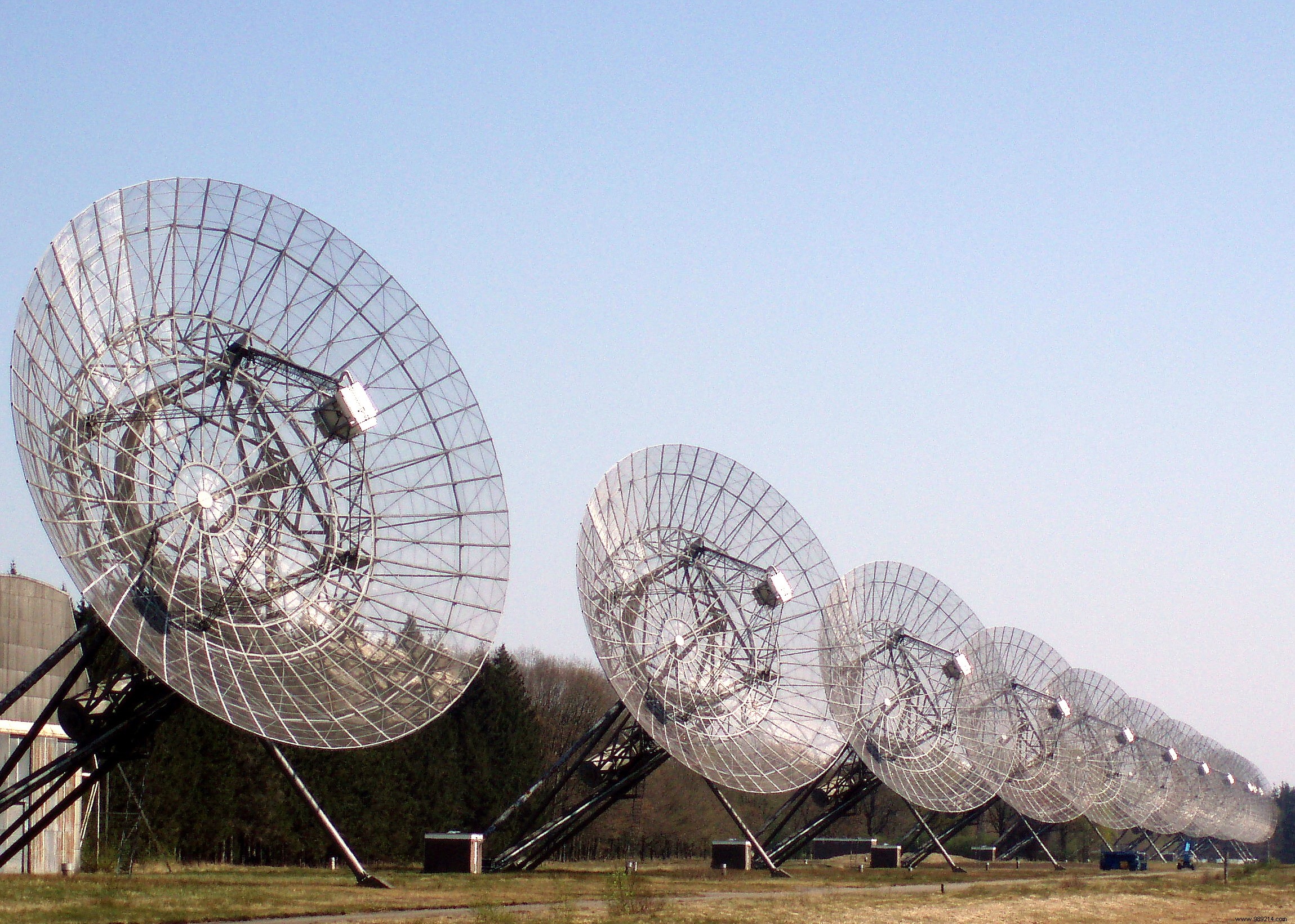
To test this, the team observed 'reddish' high frequencies with Westerbork and 'bluish' low frequencies with LOFAR. Contrary to the binary model, both red and blue frequencies were detected from the FRB, but never simultaneously.
“We observed two days of bluer radio bursts, followed by three days of redder ones,” explains lead author Inés Pastor-Marazuela. “This rules out binary systems as the origin of these FRBs.” The findings indicate a 'bare' environment around the FRB, with minimal stellar winds allowing redder frequencies to propagate freely.
Ultimately, the team concludes these bursts likely stem from a slowly rotating magnetar—a dense, ultra-magnetic neutron star packing a solar mass into a few kilometers-wide sphere. Its periodic spin could beam signals toward Earth every two weeks.
