Originally set for November, NASA's Space Launch System (SLS) is now targeting a February liftoff for the Artemis I mission, sending an uncrewed Orion capsule on a lunar orbit.
NASA's powerful SLS rocket is designed to propel future crews back to the Moon. Its debut flight, Artemis I, was initially planned for November to test an uncrewed Orion capsule in lunar orbit. Due to development setbacks, NASA has shifted the target to mid-February.
A two-week launch window opens February 12, as announced at the October 23 press conference. Success hinges on a January dress rehearsal. Backup windows are available in March and April, aligned with optimal Earth-Moon positioning.
Artemis I will validate Orion's safety systems. Artemis II will follow with crew, mirroring Apollo 8's 1968 milestone. NASA aims to land astronauts on the Moon by the late 2020s—not before 2025—the first since Apollo 17 in 1972.
To date, NASA has invested $10 billion in SLS and $16 billion in Orion. Each future SLS launch is projected at around $2 billion.
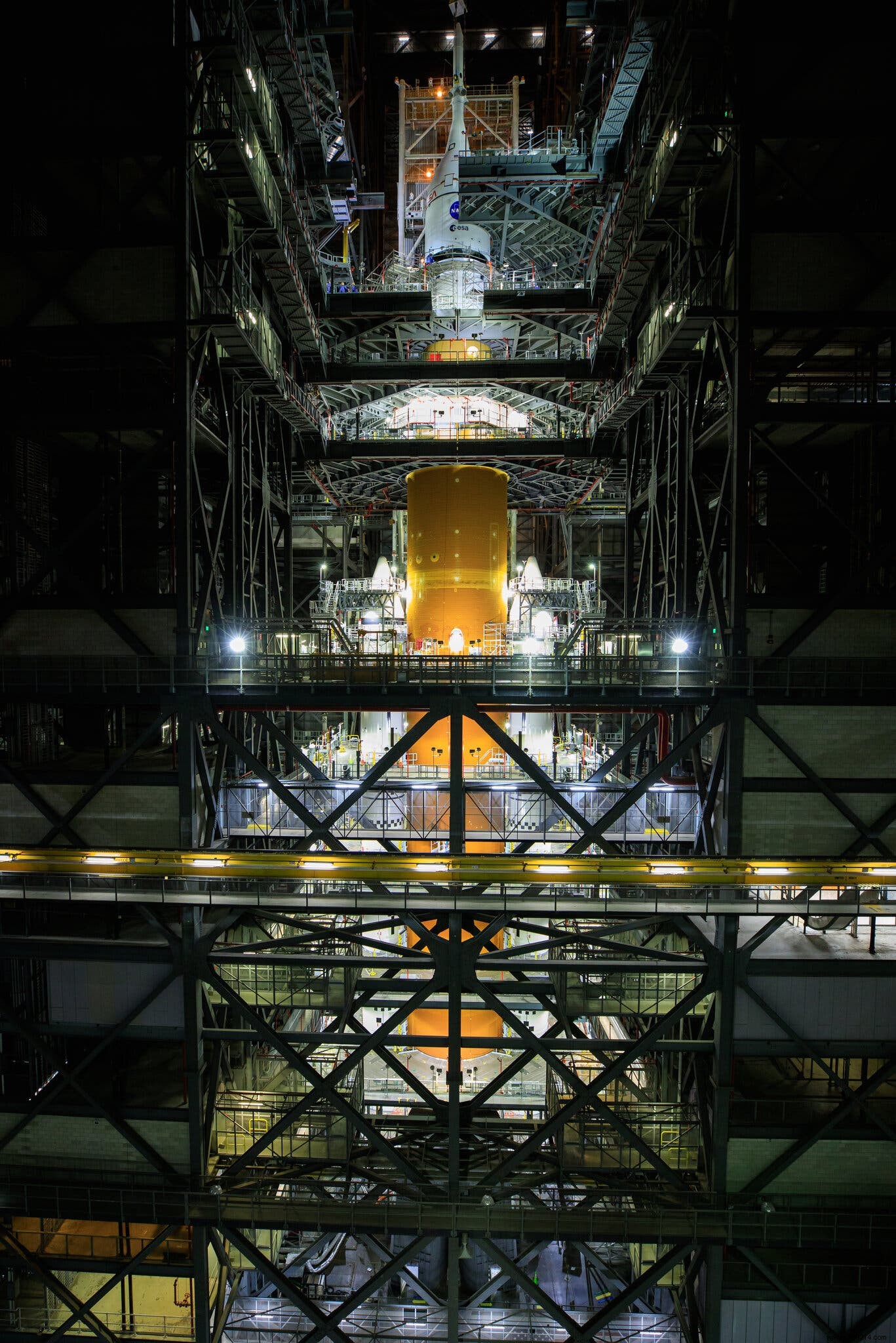
On October 21, 2021, teams at NASA's Kennedy Space Center in Florida mated Orion to the 98-meter SLS stack, finalizing assembly for Artemis I's test flight.
If timelines hold, 2022 could mark the Moon's busiest year, with Artemis I, NASA's lunar satellites, private landers, plus missions from China, Russia, India, and South Korea.
