Recent simulations of extended Mars missions reveal that crews may swiftly detach from mission control, evolving into self-reliant teams.
Multiple space agencies plan crewed Mars missions before 2040, demanding solutions to formidable technical and physiological hurdles. Landing safely on the Red Planet tops the list, while human bodies—evolved over millions of years under Earth's gravity, atmosphere, pressure, and temperatures—must adapt to Mars' harsh environment.
Yet psychological and behavioral challenges, often overlooked, pose equally critical risks. A Mars journey involves prolonged travel, enforced isolation, and communication delays up to 20 minutes each way due to the 380-million-mile Earth-Mars distance.
Researchers lack direct data on how teams so far from home will cope. Will astronauts stay in constant touch with Earth, collaborating seamlessly? Or will they form an autonomous group, distancing themselves from ground control?
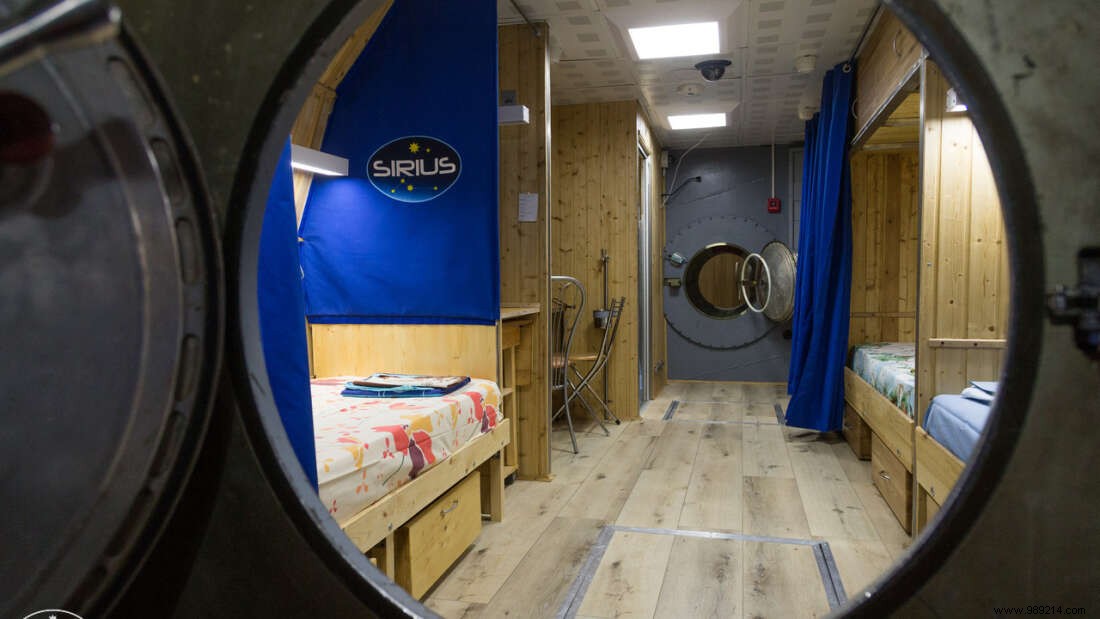
To address this, Russian scientists launched the SIRIUS project, simulating long-duration spaceflight psychology. Fresh findings, published in Frontiers in Physiology, validate these concerns based on expert analysis.
These insights stem from two SIRIUS isolation experiments: 17 days in 2017 and 120 days in 2019, each with a 12-person international crew.
Prior studies hinted at early disconnection from mission control; these confirm it. Communication lags and extended isolation prompt crews to withdraw inward, prioritizing self-reliance.
Both teams curtailed contact with ground control—except during key events like simulated mid-mission landings—often ignoring advice to handle operations independently as they adapted.
Crew autonomy signals resilience, but experts caution of downsides. "The downside is that mission control loses insight into crew needs and challenges, limiting effective support," explains Dmitry Shved, PhD, from the Russian Academy of Sciences and Moscow Aviation Institute.
Gender differences emerged initially: women reported issues more readily, while men communicated less. Over time, styles converged, with each adapting to the other.
A new SIRIUS experiment—an eight-month isolation—began November 4, yielding further data.
