NASA's Ingenuity helicopter, the first experimental aircraft on Mars, carries a small piece of fabric from the Wright Flyer—the plane that enabled the Wright brothers' first controlled, powered flight in 1903, marking the dawn of aviation history.
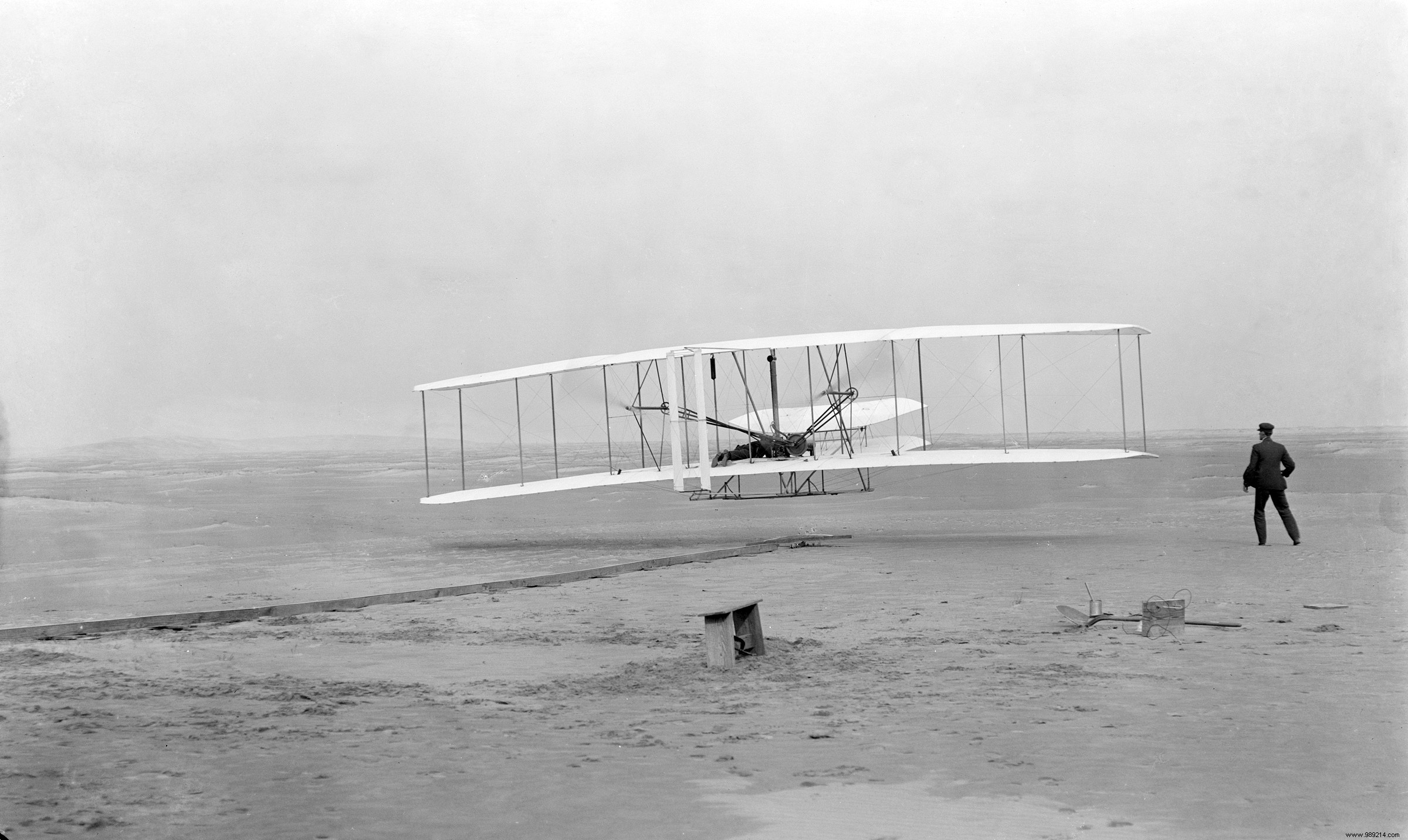
After more than a month on Mars, the Perseverance rover deployed the Ingenuity helicopter by releasing its protective anti-debris shield. Ingenuity is slated for its inaugural powered flight no earlier than April 8—over 117 years after the Wright brothers' pioneering flights at Kitty Hawk, North Carolina, on December 17, 1903, where they completed four flights that day.
This tribute is fitting: Carillon Historical Park in Dayton, Ohio—the Wright brothers' hometown—donated a fabric sample from the lower left wing of the original Wright Flyer. The brothers' great-grand-niece and great-grand-nephew approved the gift.
"Wilbur and Orville Wright would be thrilled to know that a small piece of their 1903 Wright Flyer I—the machine that launched the space age—will make history again by reaching Mars!" they stated.
The fabric is affixed to a cable beneath the helicopter's solar panel.
Notably, fragments of wood and fabric from the Wright Flyer previously journeyed to the Moon with Apollo 11 in 1969 and orbited Earth with John Glenn on the space shuttle Discovery in 1998. Like the Wright brothers, both Armstrong and Glenn hailed from Ohio.
NASA's Jet Propulsion Laboratory (JPL) identified an ideal 10-by-10-meter "aerodrome" next to Perseverance's landing site in Jezero Crater for the test flight.
JPL plans initial checks before Ingenuity spins its blades at nearly 2,900 RPM, ascending to about 3 meters for 30 seconds. Perseverance will observe from a safe distance, capturing audio and video.
If successful, it will mark the first powered, controlled flight on another planet.
