Tonight, space enthusiasts worldwide are focused on NASA's Perseverance rover as it attempts to land on Mars. But the excitement extends beyond Earth—several orbiting spacecraft are precisely positioned to capture every moment.
It's the big day. Launched July 30 aboard a United Launch Alliance Atlas V rocket, Perseverance is slated for touchdown this evening. Follow the live event using the links at the end of this article. If successful, NASA will operate three active missions on Mars' surface: the Curiosity rover, InSight lander, and Perseverance.
Several orbiters are also circling the Red Planet, ready to support the landing.
European Space Agency orbiters play a key role. The ESA-Roscosmos ExoMars Trace Gas Orbiter (TGO) will relay data to Earth just four hours post-landing. Meanwhile, the Mars Express orbiter is targeted at Jezero Crater, providing NASA with descent data and planning surface photos of Perseverance in the coming weeks.
NASA's probes are equally vital. The Mars Reconnaissance Orbiter (MRO) will position directly overhead during descent to receive Perseverance's signals and beam them back to Earth, confirming the landing around 9:55 p.m. French time.
“MRO has been newly configured to send telemetry data back to Earth throughout the landing timeline in 5-second bursts, with a latency of about 16 seconds,” according to NASA's Jet Propulsion Laboratory (JPL) press release.
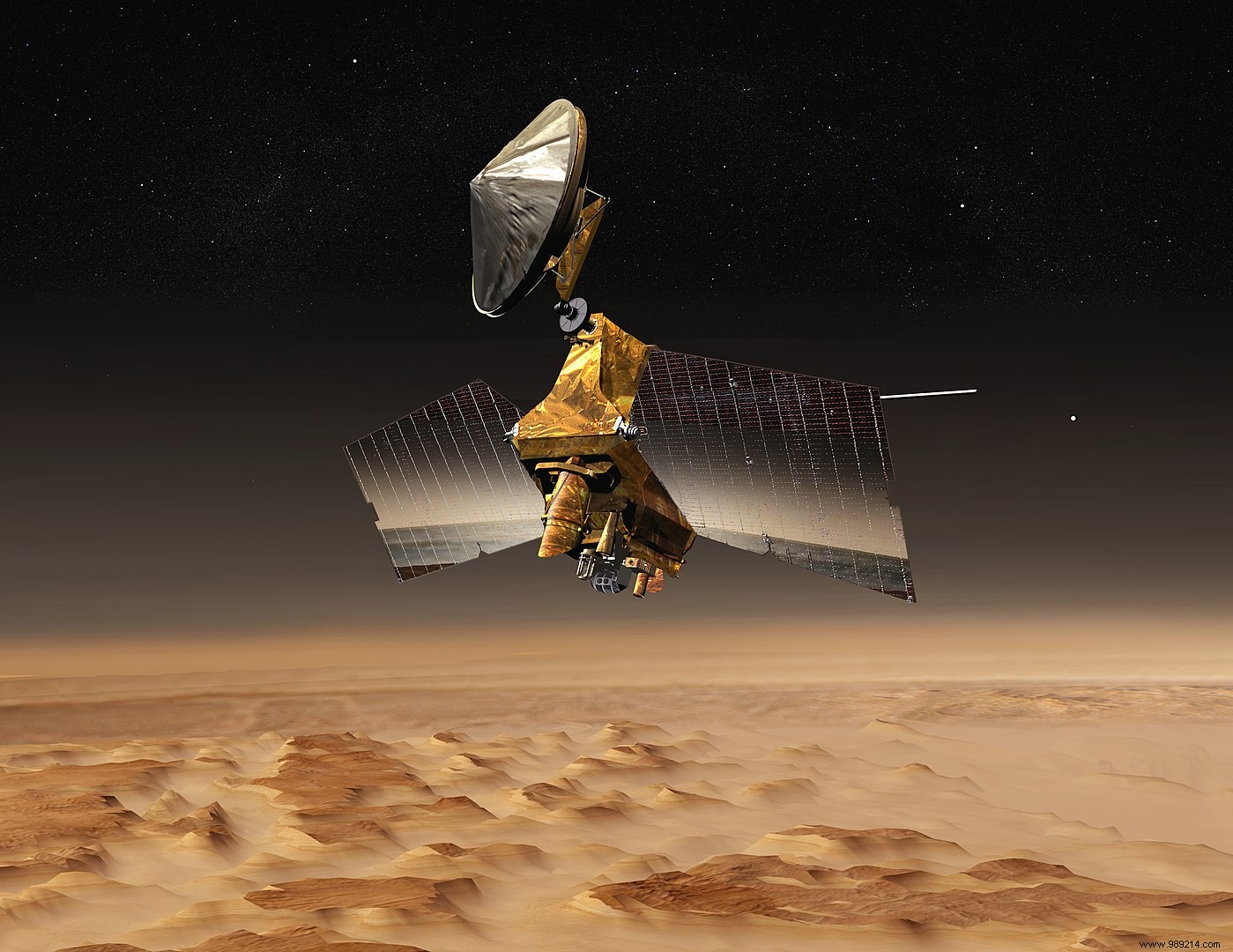
NASA also plans to use MRO for descent images, similar to those captured during Curiosity's 2012 landing.
Additionally, NASA's Mars Atmosphere and Volatile Evolution (MAVEN) orbiter will contribute atmospheric data from the entry, descent, and landing phase. Though it typically requires processing before surface relay, MAVEN's insights will arrive about 10 hours after touchdown.
French-language live links:
- CNES YouTube channel
- Astro Alex YouTube channel
- The Space and Aero channel
English options: NASA's Facebook page or website.
