NASA engineers have successfully completed a pivotal test, confirming the James Webb Space Telescope's ability to receive and respond to commands in space. With this milestone, the October 2021 launch appears firmly on track.
Reliable communication is essential for any space mission. Even the most advanced telescopes are ineffective without the ability to receive ground commands. That's why pre-launch testing—known as end-to-end ground segment validation—is critical to verify that instruments respond correctly from Earth.
This week, NASA confirmed the James Webb Space Telescope "answered the call" flawlessly.
During the test, commands to power on, deploy mechanisms, and operate all four of Webb's science instruments were transmitted from the Mission Operations Center to the Space Telescope Science Institute (STScI) in Baltimore, Maryland.
Though still Earthbound, engineers simulated the space environment using specialized equipment to mimic the radio link with NASA's Deep Space Network. This global array of antennas—in California, Spain, and Australia—ensures 24/7 connectivity for command relay once in orbit.
"It was also the first time that we demonstrated the complete cycle of conducting observations with the observatory's scientific instruments," said Amanda Arvai, deputy manager of the mission operations division. The instruments not only activated but captured test data, which was successfully returned for analysis.
Originally slated for March after multiple delays, the mission faced further setbacks from instrument integration and the COVID-19 pandemic. NASA has now set a firm date: October 31, 2021.
This timeline includes a three-month "programming reserve," providing buffer for any technical or pandemic-related issues. Barring unforeseen events, the launch looks achievable.
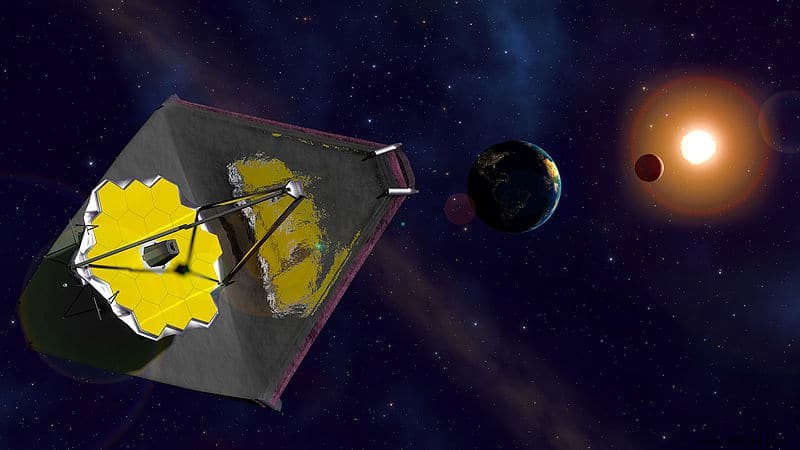
Positioned at the Sun-Earth L2 Lagrange point, 1.5 million kilometers from Earth away from the Sun, Webb will revolutionize infrared astronomy. It will peer into the early universe to observe the first stars and galaxies, and analyze exoplanet atmospheres to assess their potential habitability.
