China has successfully launched a secretive reusable experimental spacecraft into orbit, with limited details released. This mission bears striking similarities to the U.S. Air Force's X-37B spaceplane, which has conducted multiple covert operations.
On Friday, September 4, Chinese authorities launched a Long March 2F rocket from the Jiuquan Satellite Launch Center, carrying the experimental spacecraft known as Chongfu Shiyong Shiyan Hangtian Qi. The launch was conducted discreetly, with no images of the spacecraft or liftoff released publicly. Xinhua, China's state media, confirmed the mission's success less than three hours after launch, stating the craft was placed in orbit to conduct "tests." It landed successfully two days later.
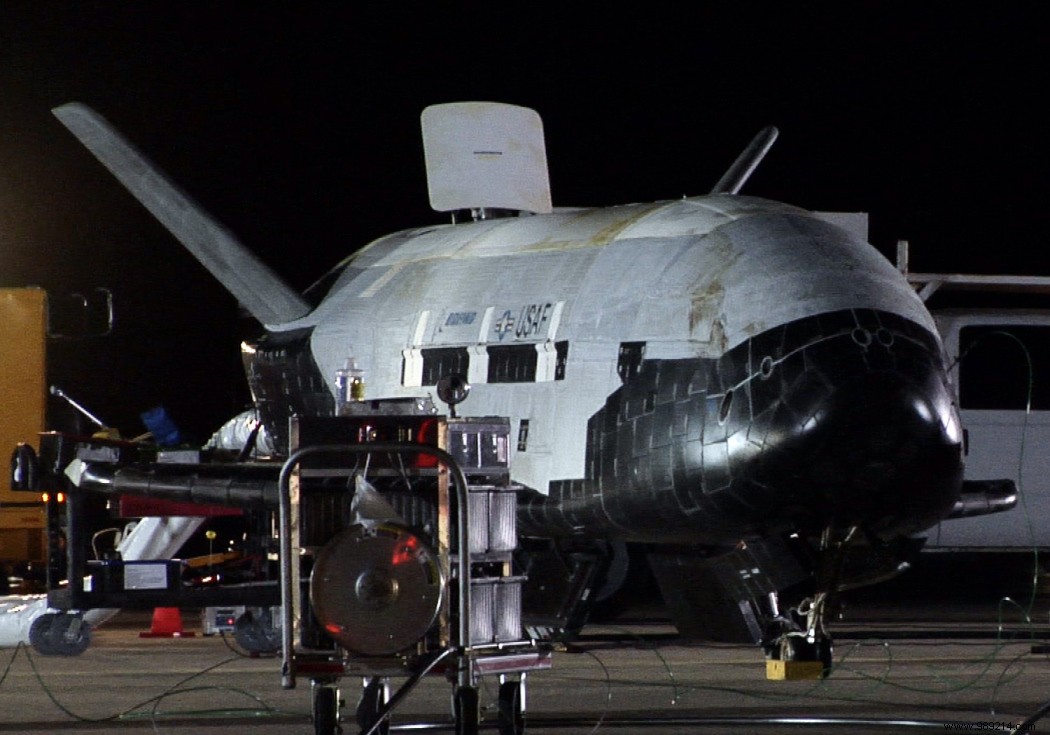
Since 2010, the United States has executed several classified missions using two reusable X-37B spaceplanes, capable of orbiting at altitudes between 230 and 1,064 km. These resemble scaled-down versions of the Space Shuttle: each X-37B measures 8.9 meters long, 2.9 meters high, and has a wingspan of about 4.6 meters. By contrast, the Space Shuttle was 37 meters long with a 24-meter wingspan.
The X-37B's inaugural flight lifted off on April 22, 2010, enduring nearly eight months in orbit before landing on December 3, 2010. Subsequent missions extended durations, with one in 2017 lasting almost two years.
The U.S. Air Force has kept details of these missions, including the fifth one, highly classified. Officials have described the program as testing "experimental electronics and heat-conducting technologies in a long-duration space environment." A sixth mission has been underway since May 16.
China first announced plans for a similar reusable spaceplane in 2017, targeting a 2020 test as part of its "space transportation roadmap" outlined by China Aerospace Science and Technology Corp (CASC), according to SpaceNews. Recent upgrades to the Long March 2F launch tower, enabling heavier payloads, align with this timeline, suggesting the September 4 launch fulfilled these ambitions.
