Astronomers have uncovered compelling evidence for a gas giant planet in the GW Orionis triple-star system. If confirmed, it would mark the first known planet orbiting three stars. The findings are detailed in Monthly Notices of the Royal Astronomical Society.
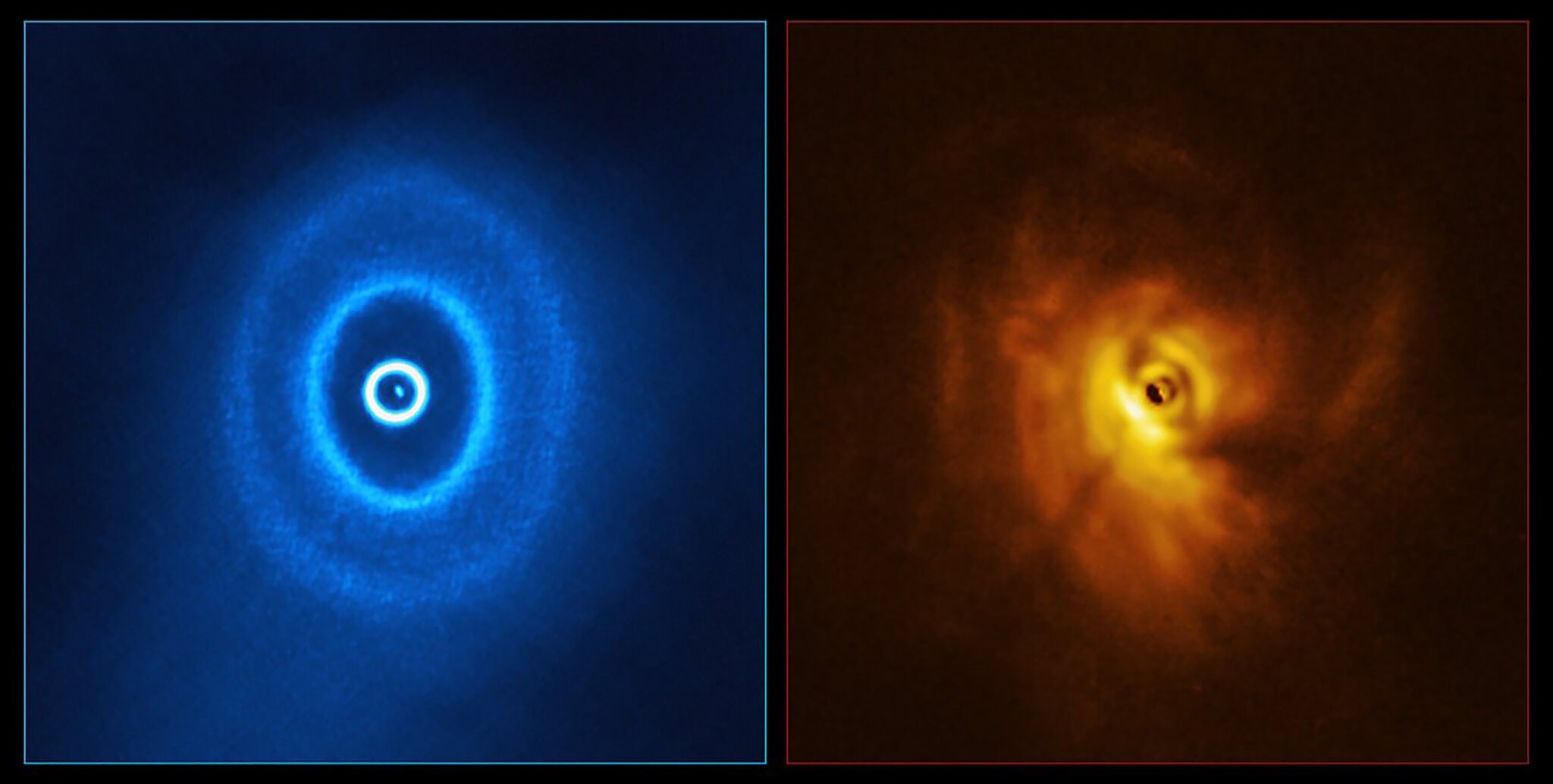
Located 1,300 light-years away in the Orion constellation, GW Ori is a young stellar system encircled by a vast disk of dust and gas. Uniquely, it comprises three stars: the inner pair orbits every 241 days at roughly one astronomical unit (the Earth-Sun distance of about 150 million km). The third star circles the duo every 11.5 years in a misaligned orbit at eight astronomical units.
Adding to its intrigue, the system's disk is divided into two rings, with the outer one tilted at about 38 degrees. To unravel this geometry, researchers turned to the ALMA array in Chile for high-resolution observations.
Direct imaging and computer simulations reveal that the stars' conflicting gravitational pulls in different planes primarily cause the misalignment—though other factors may contribute.
Scrutiny of the dust rings revealed a significant gap, which astronomers attribute to a massive planet carving out the space. This inferred world resembles a gas giant like Jupiter, typically among the first planets to form in young systems, followed by rocky worlds akin to Earth.
Hypothetically, any life on this giant wouldn't distinguish all three stars; the close inner pair would merge into a single bright point.
While planets in binary systems are known, none have been confirmed around triples—despite at least one in ten stars existing in such configurations. Confirmation here would underscore how commonplace planet formation is. Additional observations are slated for the coming months to seek direct proof.
