Could there be planets better suited for life than Earth? Leading astronomers argue yes, pinpointing worlds potentially more conducive to complex life forms.
Earth remains the only known home to life, long assumed the gold standard for habitability. But astronomer Dirk Schulze-Makuch from Washington State University challenges this view. In a study published in the journal Astrobiology, he explores whether other worlds might offer superior conditions.
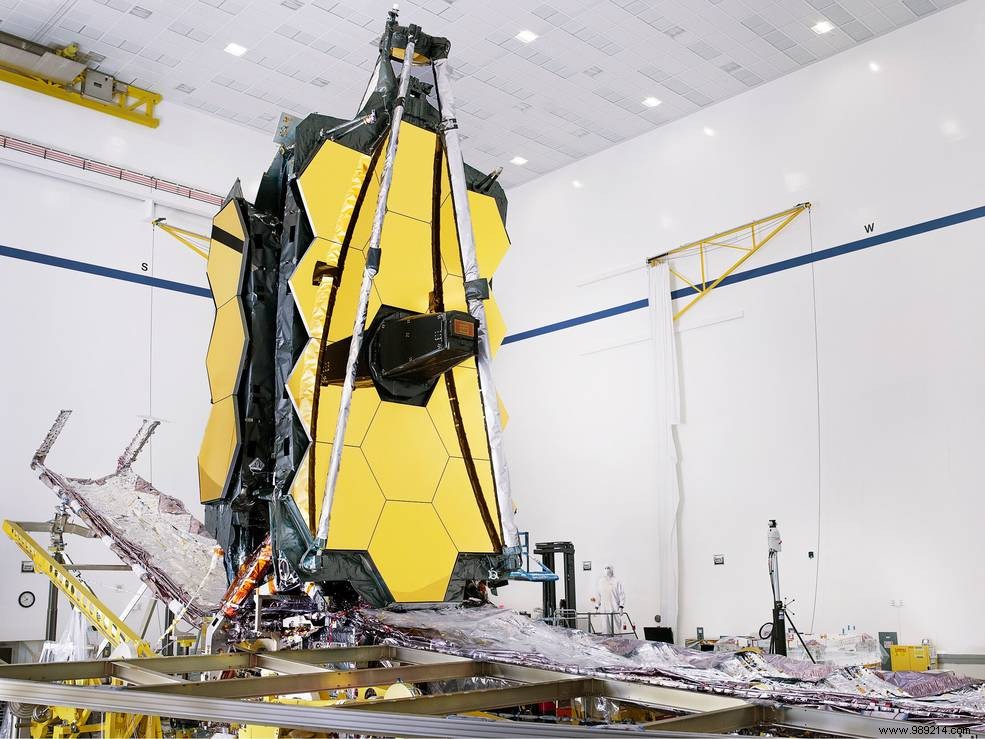
Upcoming observatories like NASA's James Webb Space Telescope (launching soon), ESA's PLATO (2026), and NASA's proposed LUVOIR (2025-2035) will revolutionize exoplanet studies. Schulze-Makuch emphasizes the need to target wisely: "We must prioritize planets with the best conditions for complex life, avoiding fixation on 'Earth 2.0' when superior options may exist," he notes.
Collaborating with René Heller from the Max Planck Institute for Solar System Research and Edward Guinan from Villanova University, Schulze-Makuch defined super-habitability criteria. They scanned over 4,500 known exoplanets to find the top matches.
Focus falls on rocky, terrestrial-type planets in their stars' habitable zones, where liquid water could exist on the surface.
While Sun-like G-type stars are considered, their ~10-billion-year lifespans limit time for life—Earth's complex life emerged only after 4 billion years. K-type dwarf stars (orange dwarfs), cooler and less massive, burn steadily for 20 to 70 billion years, giving life ample development time.
Planets shouldn't be too ancient either, as they risk losing geothermal heat and magnetic protection. Ideal candidates: 4.5 to 8 billion years old, like Earth but up to 8 billion.
Super-habitable planets should be ~10% larger than Earth for more land area, and 1.5 times more massive to retain internal heat and atmosphere longer via stronger gravity.
Warmer, wetter conditions boost biodiversity, as seen in Earth's tropical hotspots. Target surface temperatures ~5°C above Earth's average, with higher humidity.
From 4,500+ exoplanets, 24 top contenders emerged—all over 100 light-years away, beyond reach for now. None match perfectly, but many are close: 16 are 5-8 billion years old, five have suitable temperatures. KOI 5715.01 excels, meeting four key criteria and potentially outpacing Earth for habitability.
