A detailed analysis of TESS satellite data has uncovered an intriguing anomaly: in a binary star system, one star is periodically dimmed by an unidentified object. Experts propose it could be a large asteroid or a disintegrating mini-planet shedding a dust cloud.
Launched in April 2018, the Transiting Exoplanet Survey Satellite (TESS) took up the mantle from Kepler, which accounted for two-thirds of all known exoplanet discoveries. TESS has excelled, confirming more than 170 new exoplanets while over 4,700 candidates await validation.
Following Kepler's proven transit method, TESS monitors stars for subtle, recurring dips in brightness—signatures of planets passing in front of their host stars from our vantage point.
Recently, astronomers analyzing TESS observations identified TIC 400799224, a binary system where one star shows unusual brightness fluctuations. The two stars orbit each other at approximately 300 AU (1 AU is the Earth-Sun distance).
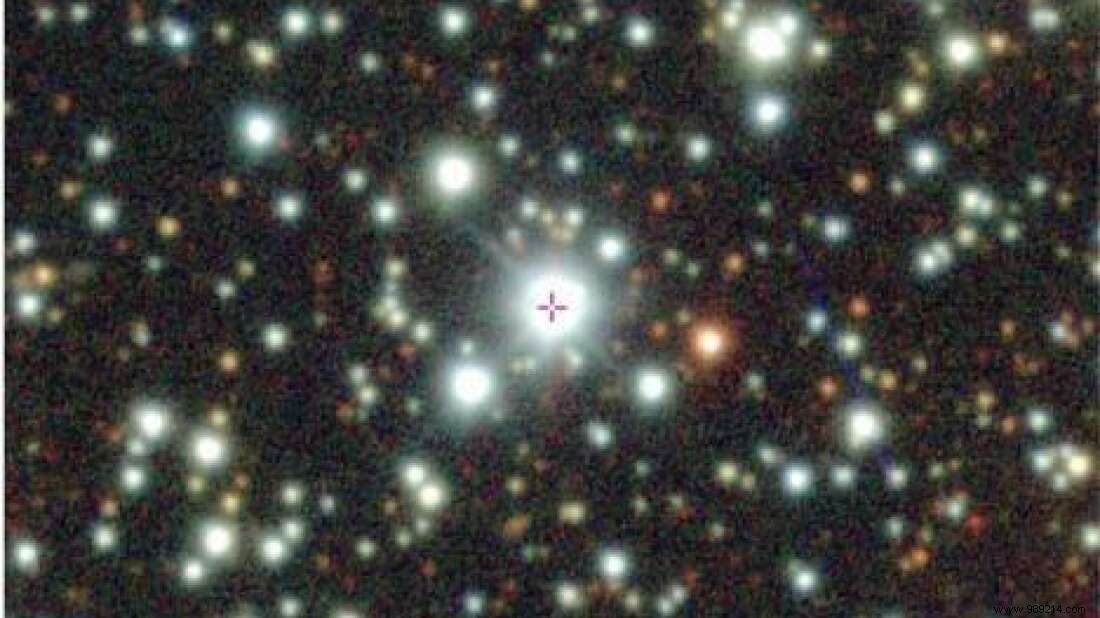
The research team hasn't pinpointed which star is affected, but the dimming occurs roughly every 19.77 days, with highly variable duration, depth, and shape. This irregularity points to a sporadic dust cloud, likely from a nearby large asteroid or small planet breaking apart.
Similar events have been observed before, though in fainter, less massive stars with more consistent dips. The true nature of this object remains a mystery—but citizen scientists can contribute.
At magnitude 12.6, TIC 400799224 is observable with modest backyard telescopes from the southern hemisphere. Enthusiasts could capture transits reaching up to 25% depth, enriching professional datasets to track changes over time. Northern observers, unfortunately, are out of luck due to its southern position.
