Astronauts today consume mostly packaged foods during space missions. But for sustainable Moon bases and Mars colonies, on-site food production will be essential.
During the Proxima mission, French astronaut Thomas Pesquet lived on the International Space Station (ISS) from November 2016 to June 2017, returning in April 2021 via SpaceX Crew Dragon. He sampled gourmet dishes from chefs like Alain Ducasse and Thierry Marx—Breton lobster, creamy lemon, duck breast, or poultry Parmentier—but all were pre-packaged. Fresh food was limited, relying on canned goods shipped from Earth.
As outlined by the Canadian Space Agency (CSA) in a 2019 report, space food must be compact, lightweight, highly nutritious, flavorful, and safe. Options include canned, dried, dehydrated, thermostabilized, or irradiated products, plus limited fresh or ready-to-eat items. For long-term lunar villages and Martian settlements, however, in-situ production is critical. Beyond growing vegetables, experts are exploring aquaculture—fish farming—to provide vital proteins, though microgravity vegetable yields have limitations.
Hakai Magazine highlighted IFREMER researcher Cyrille Przybyla's Lunar Hatch project in a February 22, 2021, article. The initiative aims to enable fish breeding in space. Fish in large tanks would be fed “new sources of protein and fat,” with effluents recycled via microalgae. For deep-space missions, Przybyla recommends transporting fertilized eggs, which endure launch stresses better than live fish.
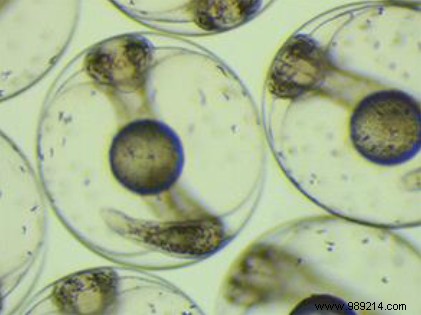
To validate feasibility, Przybyla simulated launch vibrations on fish eggs. Remarkably, 76-95% hatched, nearly matching the untreated control group.
Not all species suit space: fish must use minimal oxygen, tolerate temperature swings and cosmic radiation, and have short hatching times. Bass and meagre outperform salmon and cod.
Beyond nutrition, Przybyla notes psychological benefits. Fish farms could evoke Earth life, offering astronauts distraction and purpose through animal and crop care.
