China is gearing up to deploy its upcoming super-heavy launch vehicle to assemble a colossal space-based solar power plant in geostationary orbit.
China's space program has surged ahead in recent years, marked by groundbreaking achievements. In 2019, it became the first nation to land a rover on the far side of the Moon. Just last year, it returned the first lunar samples to Earth in over four decades and accomplished its inaugural Mars landing with the Tianwen-1 mission. It also successfully launched the core module of its Tiangong space station.
While these milestones might seem ambitious, they align with China's space roadmap outlined since 2016. The nation has accelerated its efforts, positioning itself as a leading contender in the global space race alongside the U.S., though America maintains a significant lead.
China's ambitions extend to deep-space human exploration, evidenced by its joint lunar base agreement with Russia. Central to these goals is the Long March 9 super-heavy launcher, capable of delivering 130 tons to low Earth orbit and 50 tons to lunar orbit.
In a CCTV interview, Wu Yanhua, deputy director of the China National Space Administration, emphasized that this rocket will enable any crewed lunar missions China pursues. Yet, it will also power an even more ambitious endeavor.
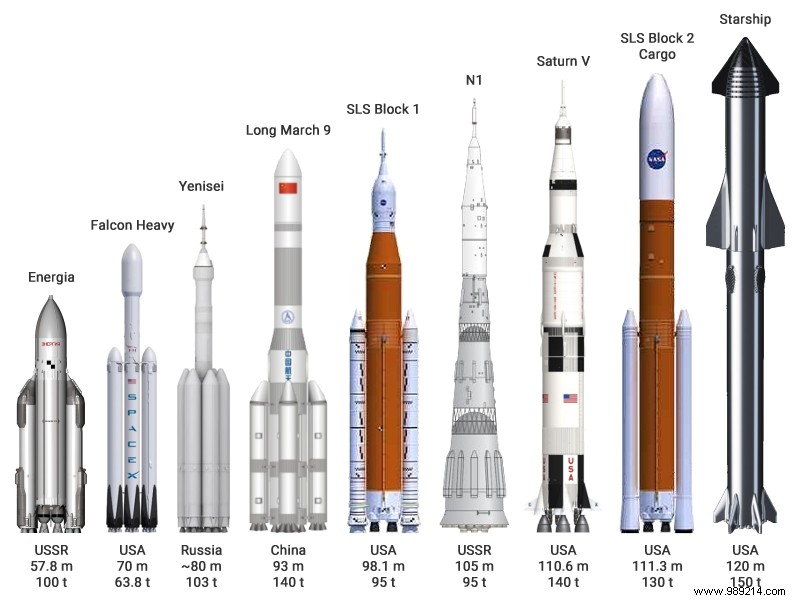
Long Lehao, chief designer of China's Long March rocket family, revealed plans to use the Long March 9 for constructing solar power facilities in geostationary orbit. The concept involves capturing sunlight at 35,786 km altitude and beaming it back to Earth via microwaves or lasers.
Presenting in Hong Kong on June 24, Long outlined a phased rollout: small-scale tests in 2022, a megawatt-scale facility by 2030, and gigawatt-scale generation by 2050 spanning one square kilometer.
This initiative demands over 100 launches and roughly 10,000 tonnes of orbital assembly.
Orbital solar power isn't novel—space panels offer uninterrupted generation free from weather. Past economic and technical hurdles stalled progress, but advances in wireless power transmission and solar efficiency now make it viable. Though costs remain undisclosed, China's technical prowess positions it to pioneer this clean energy frontier.
