The James Webb Space Telescope (JWST) stands as the most powerful space observatory ever built. But how do its images compare to those from Hubble, the longstanding benchmark in astronomy?
Hubble has expanded our cosmic horizons with breathtaking images for over three decades. JWST promises to transform our view of the universe for the next three. Often called Hubble's successor, JWST will complement it for a time, revealing distinct strengths between the two.
Positioned far apart, Hubble orbits in low Earth orbit, while JWST resides 1.5 million kilometers from Earth at the Sun-Earth L2 Lagrange point. They also observe different light spectra: Hubble focuses on optical and ultraviolet wavelengths (roughly 200 nanometers to 2.4 microns), whereas JWST targets infrared light (0.6 to 28 microns).
"It will be very, very different from Hubble," notes Klaus Pontoppidan of the Space Telescope Science Institute in Baltimore. "And I think it will be fantastic."
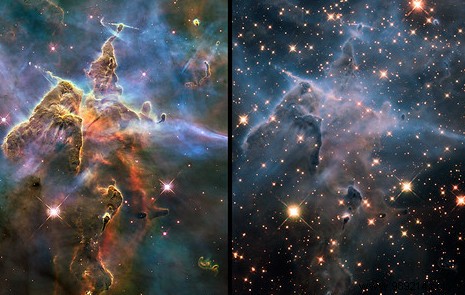
Though optimized for infrared, JWST captures the red and orange visible spectrum thanks to its gold-coated mirrors, which reflect these wavelengths while absorbing blue light.
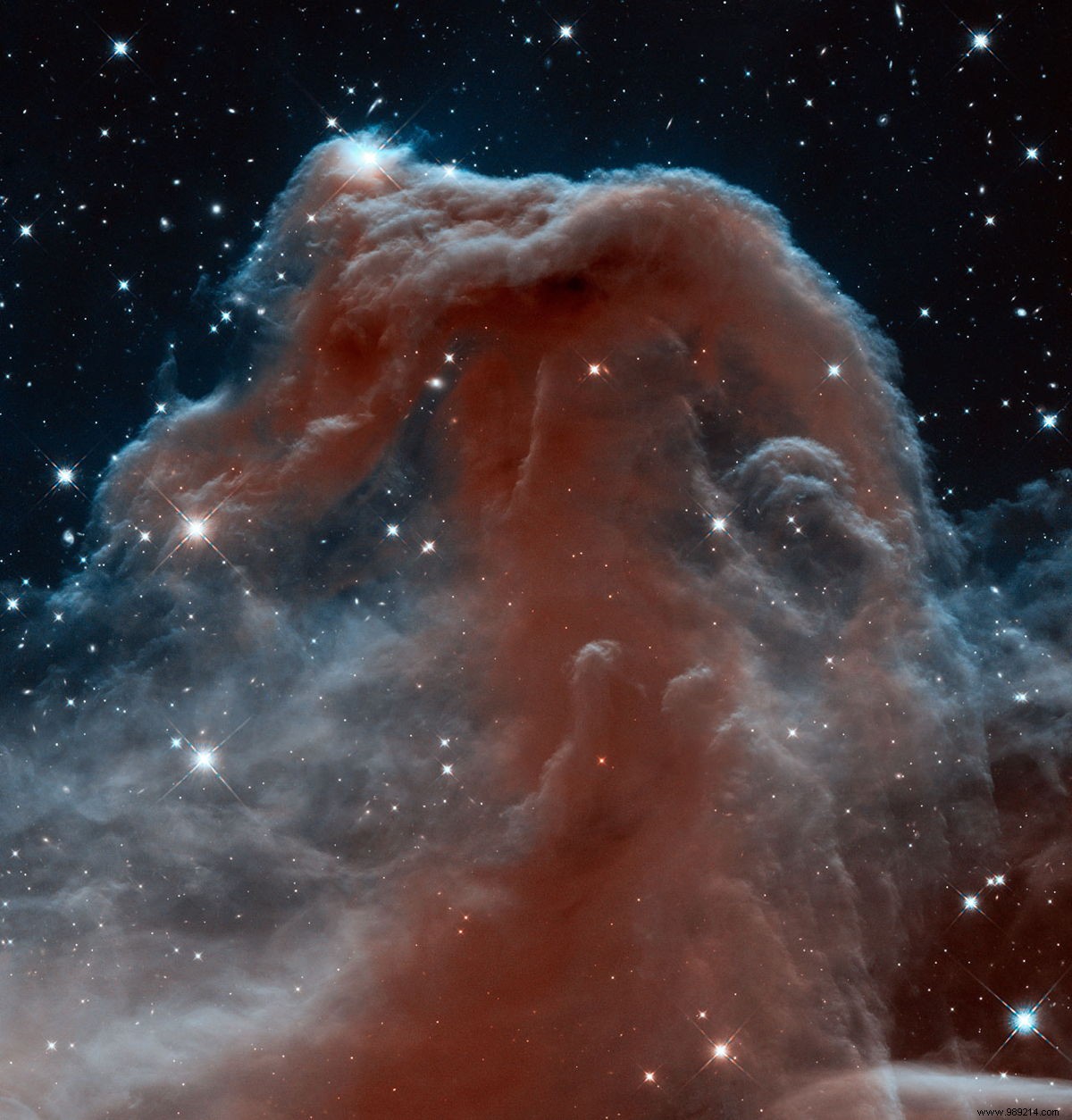
Hubble, primarily an optical telescope, can also detect some infrared—as shown in its stunning 2013 image of the Horsehead Nebula marking its 22nd launch anniversary.
Since the 1990s, Hubble has delivered razor-sharp images of stars and galaxies. JWST matches this angular resolution for equally crisp details.
Yet JWST's 6.5-meter mirror dwarfs Hubble's 2.4-meter one, enabling it to detect objects 10 to 100 times fainter. Its infrared capabilities pierce dense cosmic dust, unveiling the earliest stars and galaxies post-Big Bang.
