Scientists analyzing rock dust from Mars' Gale Crater, collected by NASA's Curiosity rover, have detected intriguing organic compounds. One leading hypothesis points to ancient microbial life.
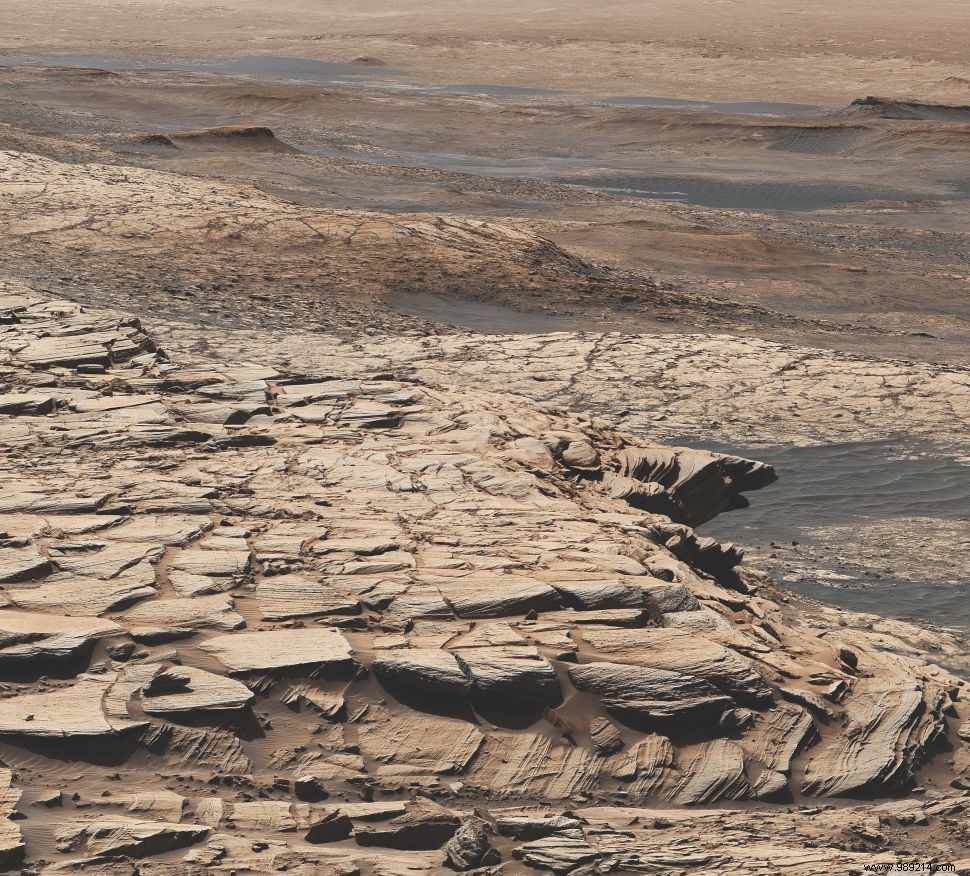
Since landing in August 2012, Curiosity has explored Gale Crater, a 154-kilometer-wide site deemed "potentially habitable." Evidence suggests it once hosted lakes and streams persisting for millions of years, ideal for microbial life billions of years ago.
A new study in Proceedings of the National Academy of Sciences details analysis of 24 rock powder samples gathered from August 2012 to July 2021. Using the rover's SAM instrument, researchers identified and characterized organic molecules—carbon-based building blocks of life on Earth.
Remarkably, nearly half the samples showed enrichment in carbon-12 (six protons, six neutrons), from five ancient sites preserved over geological timescales.
On Earth, biological processes favor carbon-12, so this could signal biotic chemistry. Yet Mars' carbon cycles remain poorly understood, urging caution against premature conclusions.
The team proposes three explanations. First: methane-producing microbes, whose methane reacted with ultraviolet light to form complex organics that settled into rocks.
Alternatively, non-biological reactions between UV light and atmospheric CO2 could produce similar results. Or, the solar system may have passed through a carbon-12-rich molecular cloud billions of years ago.
"All three scenarios fit the data," says Christopher House of Pennsylvania State University. "We need more evidence to narrow them down."
Curiosity isn't designed for definitive life detection, but its successor Perseverance is collecting samples from another ancient water-rich crater for Earth return in the 2030s, promising deeper insights.
