From planets and stars to galaxies and clusters, rotation shapes the cosmos. Now, cutting-edge research reveals angular momentum at unprecedented scales.
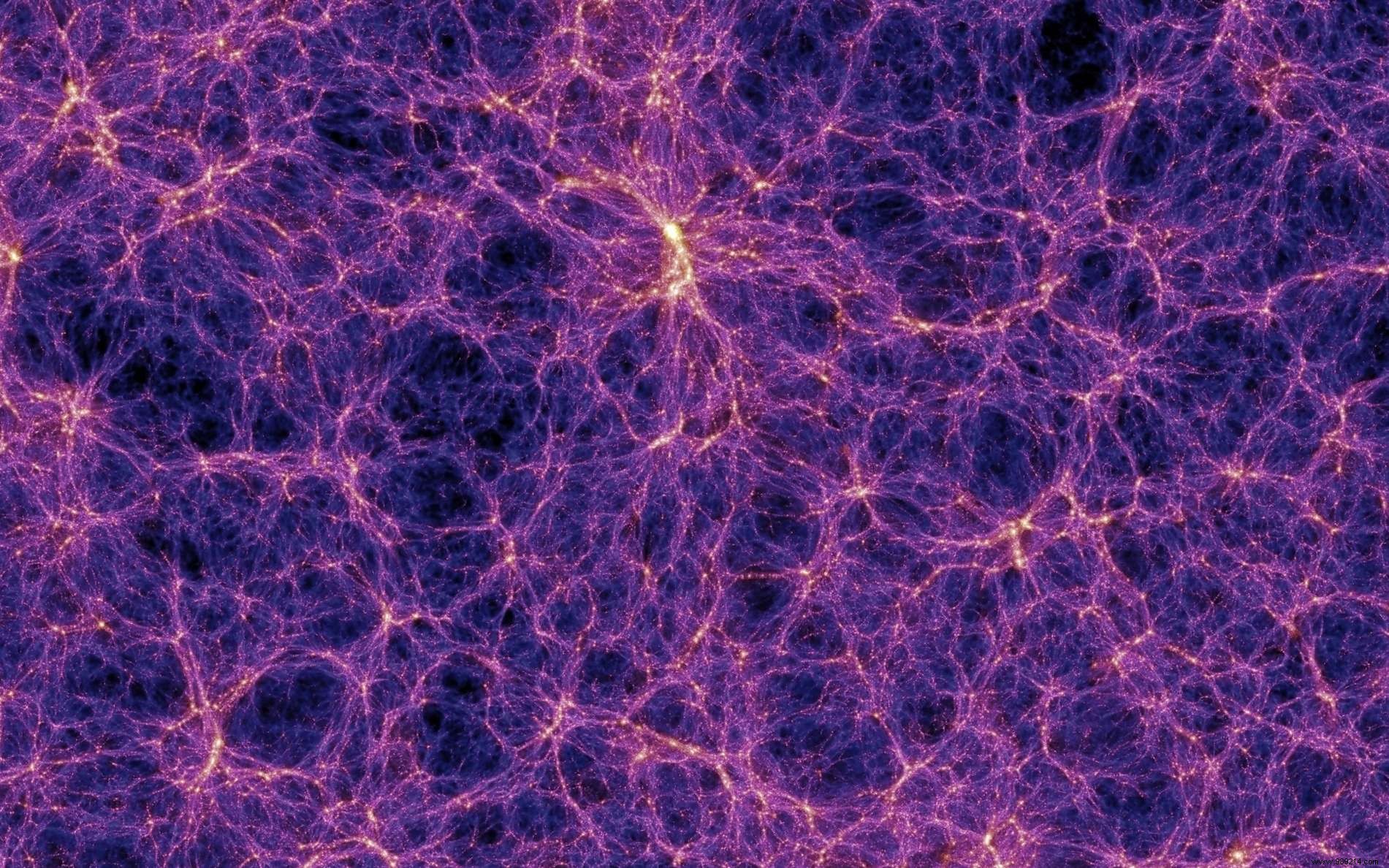
Visualizing the Universe's structure is challenging from Earth, but zooming out reveals a vast cosmic web of elongated filaments where galaxies reside. Galaxy clusters and superclusters gather at the intersections of these filaments, which harbor over half of the Universe's observable baryonic matter.
In a groundbreaking study, astronomers have found evidence that these filaments—stretching hundreds of millions of light-years—rotate on their axes. If confirmed, they would be the largest known rotating structures in the Universe.
Researchers from Germany's Leibniz Institute for Astrophysics in Potsdam (AIP) mapped galaxy motions within these cosmic filaments using data from the Sloan Digital Sky Survey at Apache Point Observatory in New Mexico.
As the Universe expands, light stretches toward the red end of the spectrum (redshift). Approaching objects show blueshift due to the Doppler effect.
Analyzing light from galaxies in select filaments, the team observed redshift on one side and blueshift on the other, indicating rotation.
Published in Nature Astronomy, the study suggests galaxies follow corkscrew orbits, spiraling around filament centers while moving along them.

This unprecedented rotation at cosmic scales could unlock how angular momentum first arose in the Universe—a profound mystery for astronomers.
