Astronomers from the Institute of Astrophysics of the Canary Islands (IAC), using the Gran Telescopio Canarias (GTC), have pinpointed the densest cluster of forming galaxies in the early universe. Their peer-reviewed study appears in Monthly Notices of the Royal Astronomical Society.
Galaxy clusters are immense gravitational collections of hundreds to thousands of galaxies. The Virgo Cluster, central to our Local Supercluster—which includes the Milky Way—hosts, for example, more than 2,000 visible galaxies.
To trace their evolution, researchers hunt for nascent clusters in the early universe. One such structure lies over 12.5 billion light-years from Earth.
In 2012, experts measured the distance to HDF850.1, a galaxy with one of the highest star formation rates known. Astonishingly, it resides in a compact group of about a dozen protogalaxies from the universe's first billion years.
In a recent IAC-led study, the OSIRIS instrument on the GTC revealed the system's properties, confirming it as the most massive cluster detected in the early universe.
“Surprisingly, all cluster members examined—around two dozen—are typical star-forming galaxies, with the central galaxy dominating star production,” says lead author Rosa Calvi, former IAC postdoctoral researcher.
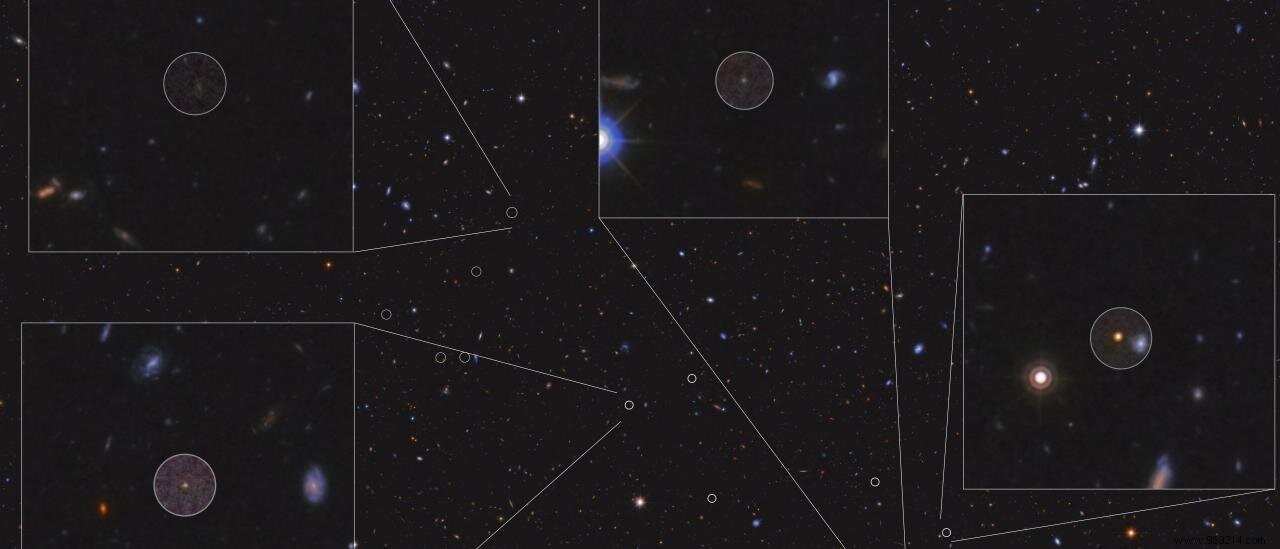
This “city under construction” is poised to evolve into a Virgo-like cluster.
Though massive, it's not the oldest: In 2019, a cluster from 13 billion years ago—when the universe was just 6% of its current age—was found using Subaru, Keck, and Gemini telescopes.
