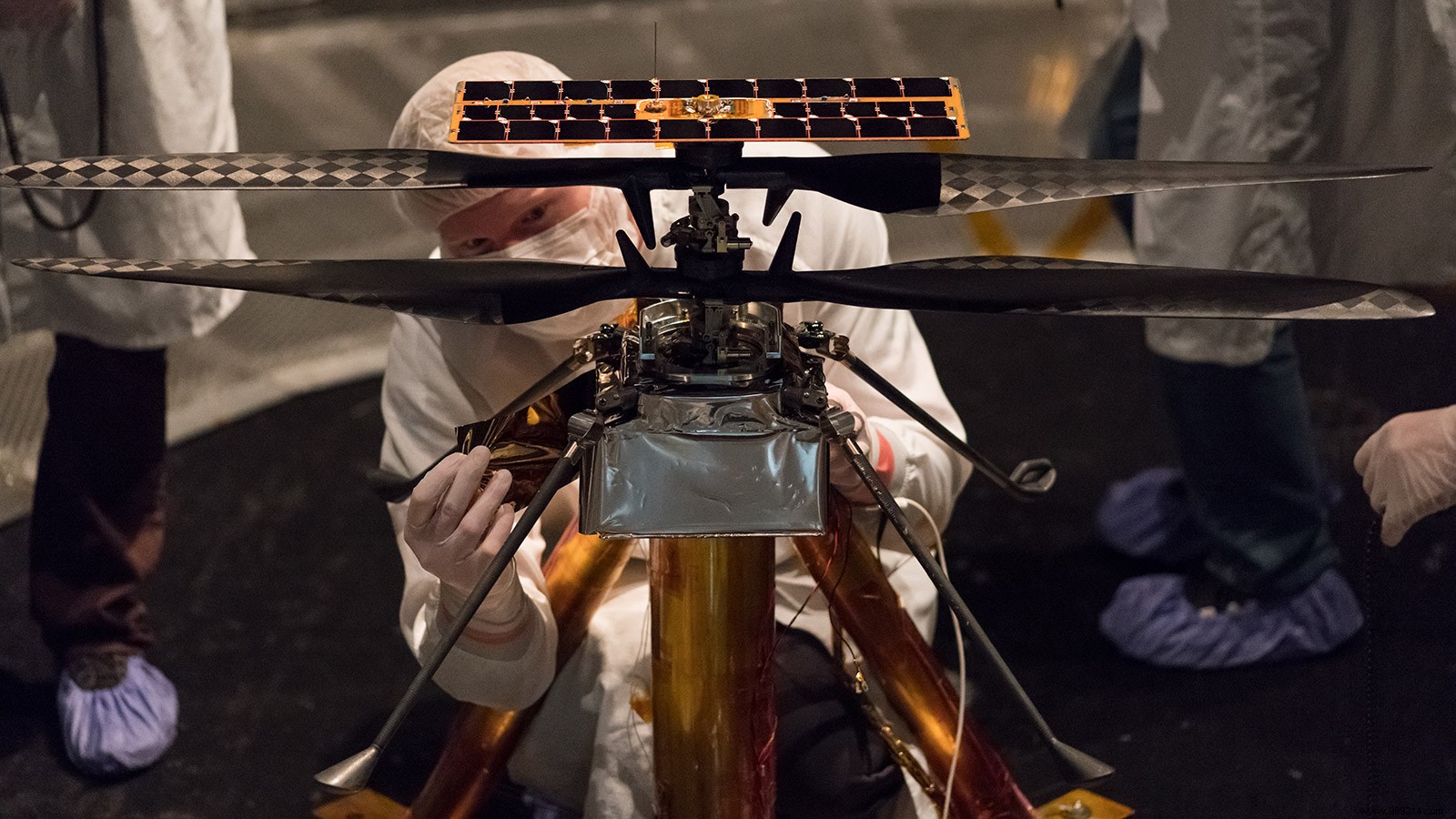
NASA engineers have successfully powered up the Ingenuity helicopter, the experimental rotorcraft hitchhiking to Mars aboard the Perseverance rover. This marks the first activation of its systems in the vacuum of space.
Launched on July 30 as part of the Mars 2020 mission, Perseverance aims to explore the Red Planet's surface for signs of ancient life. NASA is also leveraging the journey to test Ingenuity, which has one primary goal upon arrival: achieve the first powered, controlled flight on another planet. Success here could pave the way for future aerial explorers.
These advanced rotorcraft might one day transport small payloads, scout safe paths for rovers, and help astronauts evaluate hard-to-reach sites from above.
Just over a week post-launch, the team tested Ingenuity's six lithium-ion batteries for about eight hours, charging them to 35% capacity using power from Perseverance.
“This was an important milestone, as it was our first opportunity to activate Ingenuity and test its electronics since our launch on July 30,” said Tim Canham of NASA’s Jet Propulsion Laboratory.
“This charging activity shows that we survived launch and so far can handle the harsh environment of interplanetary space,” added MiMi Aung, also from JPL. “We still have a lot of firsts to do before we can attempt the first experimental flight test on another planet, but at the moment we are all very confident for the future.”
Such charging sessions will occur roughly every two weeks until arrival in the Martian system.
Perseverance and Ingenuity are set to touch down in Jezero Crater in February 2021. Starting on the 60th Martian sol, the rover will position itself at a dedicated airstrip to deploy the helicopter. Mission controllers then have 30 days to demonstrate its flight capabilities.
NASA plans five flights: the first a vertical ascent to 3 meters lasting about 30 seconds. Subsequent tests will cover several hundred meters to evaluate performance. Ingenuity will remain on the surface afterward.
