A groundbreaking telescope named SuperBIT is scheduled to launch from New Zealand in April 2022. Suspended by a helium balloon in Earth's stratosphere, it promises high-resolution images rivaling those from the Hubble Space Telescope.
Researchers from Durham, Toronto, and Princeton universities, in collaboration with NASA and the Canadian Space Agency, have developed SuperBIT—a cutting-edge astronomical telescope. Positioned at about forty kilometers altitude, above 99.5% of Earth's atmosphere, it will be carried by a massive helium balloon with a volume of 532,000 cubic meters.
Its September 2019 test flight showcased exceptional pointing stability, with variations of less than one thirty-six thousandth of a degree sustained for over an hour. This precision enables optical and ultraviolet images as sharp as Hubble's.
While balloon-based telescopes have been conceptualized before, short lifespans (a few nights) limited progress. Now, NASA and partners have engineered "superpressure" balloons that can retain helium for months.
SuperBIT's operational debut is set for April 2022 from Wanaka, New Zealand. Borne by stable seasonal winds, it will circumnavigate Earth multiple times, capturing nighttime sky images and recharging batteries via solar panels during the day.
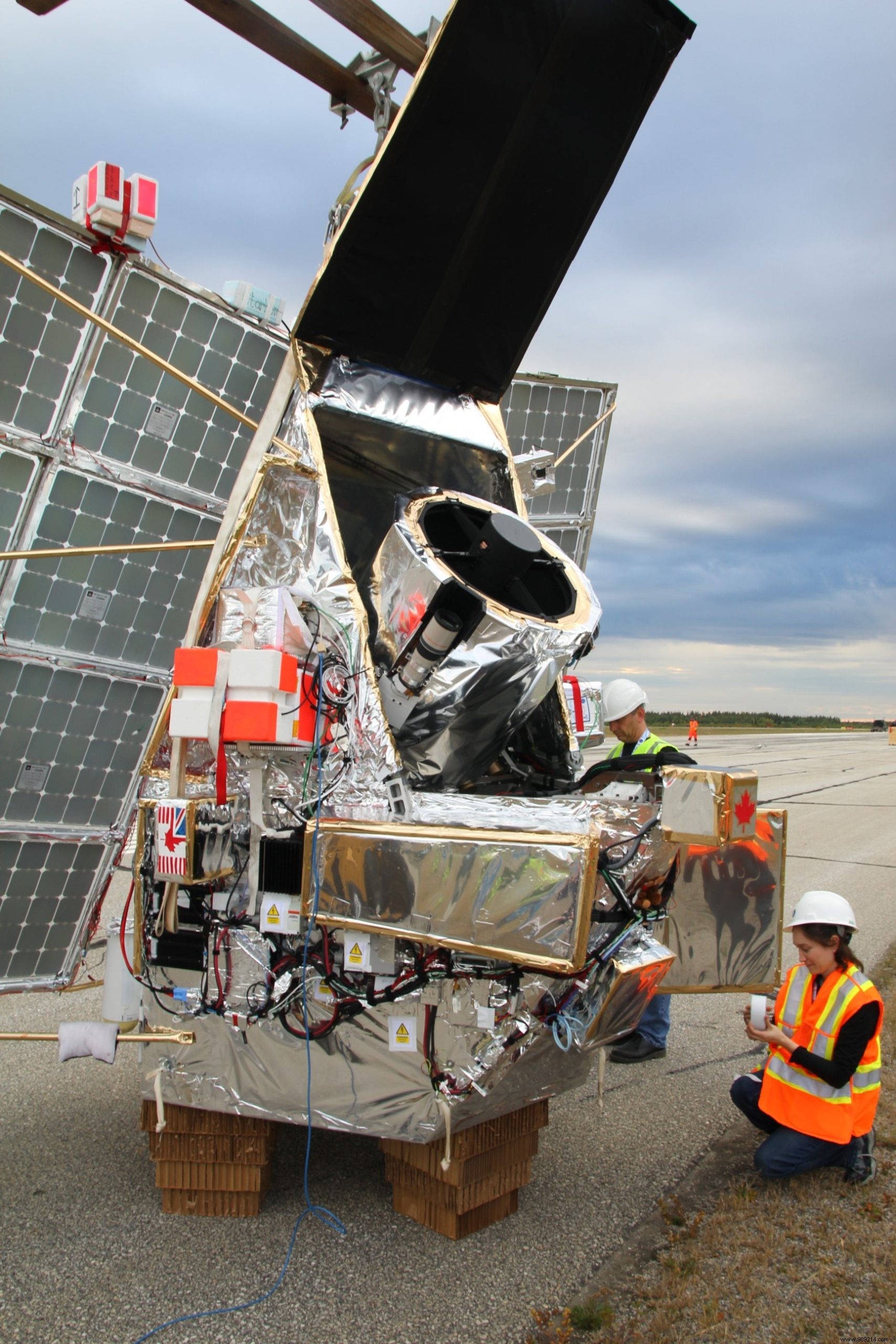
Built and operated for an estimated US$5 million, SuperBIT costs nearly a thousand times less than comparable instruments. Its recoverability allows researchers to upgrade with cutting-edge technology over time.
"New balloon technology makes space access cheap, easy, and eco-friendly," says Mohamed Shaaban from the University of Toronto. "SuperBIT can be continually reconfigured and improved."
With secured funding, the team plans to upgrade from a 0.5m to a 1.5m aperture. Enhanced light collection and wider-angle lenses could surpass Hubble's capabilities.
The April 2022 mission targets dark matter properties—comprising about 27% of the Universe's energy density—via gravitational lensing, mapping how this invisible matter bends light.
