In December 2020, China's Chang'e-5 mission returned 1.731 kg of lunar rocks to Earth—the first Moon samples in 44 years. Published in Science, initial analyses reveal these rocks are significantly younger than those from the Apollo missions.
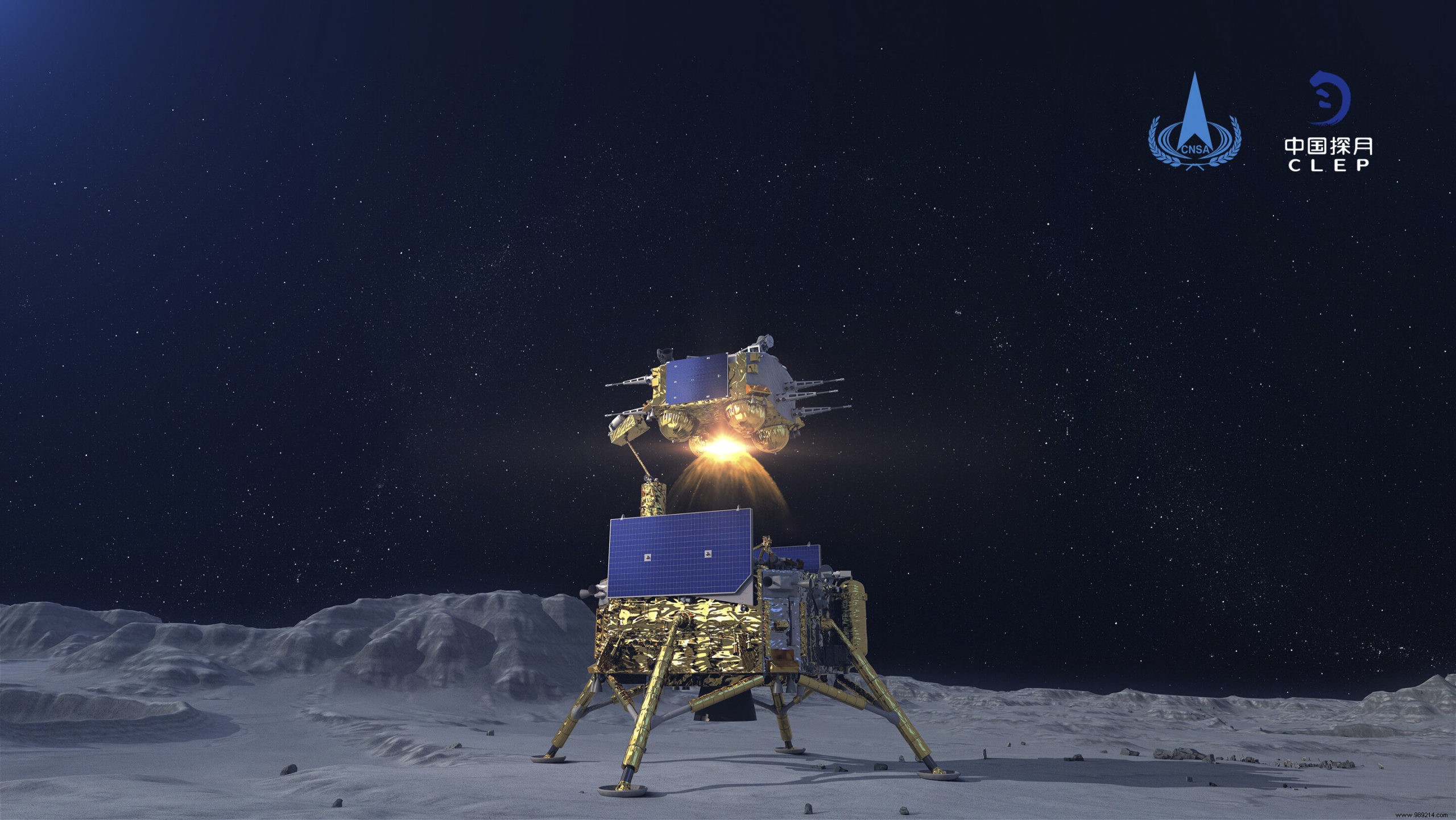
China's lunar exploration program has successfully deployed multiple landers and rovers on the Moon's surface. The Chang'e-5 mission marked its most ambitious effort yet, mirroring the Apollo program's goal of sample return. Landing nearly two years ago, the spacecraft collected and delivered almost two kilograms of lunar material back to Earth.
Targeting the vast volcanic region known as Oceanus Procellarum—one of the Moon's youngest terrains—Chang'e-5 addressed a key question: How old is this area precisely?
Traditionally, a surface's age is estimated by crater density: older surfaces accumulate more impacts. Yet this method lacks precision; prior crater counts for Oceanus Procellarum varied widely, from 3.2 billion years to just 1.2 billion.
Radiometric dating provided definitive ages by measuring ratios of radioactive isotopes in the rocks—a gold-standard technique for geochronology.
The analyzed samples comprised minerals including clinopyroxene, plagioclase, olivine, quartz, cristobalite, and ilmenite—typical of lunar volcanics. Results showed one sample at 1.893 ± 0.280 billion years old and another at 1.966 ± 0.059 billion years old, yielding a combined age of 1.963 ± 0.059 billion years. By contrast, Apollo volcanic rocks exceed three billion years.
This discovery opens new chapters in lunar science. It provides samples from an era previously unrepresented, with no evidence of elevated mantle radioactive elements to explain the volcanism—prompting fresh hypotheses. Moreover, these precise ages calibrate models for planetary surfaces beyond the Moon.
