A team of astronomers has identified dozens of primitive galaxies that exhibit remarkable maturity for their age. This groundbreaking discovery, made with the Atacama Large Millimeter/submillimeter Array (ALMA), indicates these galaxies evolved far faster than previously thought.
Most galaxies, including our Milky Way, began forming when the Universe was young—around 13.6 billion years ago, just 200 million years after the Big Bang. Roughly a billion years later, they underwent a rapid "growth spurt," building much of their stellar mass and taking on modern forms.
To study this formative period, researchers turned to ALMA in Chile as part of Project ALPINE, examining 118 ancient galaxies. Surprisingly, several showed advanced characteristics typical of more evolved systems.
Galaxies are deemed "mature" when they harbor significant dust and heavy elements, byproducts of stellar evolution. "We didn't expect to see so much of this material in these distant galaxies," says Andreas Faisst of Caltech. The presence of these elements implies multiple generations of stars had already formed and died.
"Prior studies showed these young galaxies are typically dust-poor," notes Daniel Schaerer of the University of Geneva. "Yet, about 20% of those assembling in this era were very dusty, with much of the ultraviolet light from new stars obscured by dust."
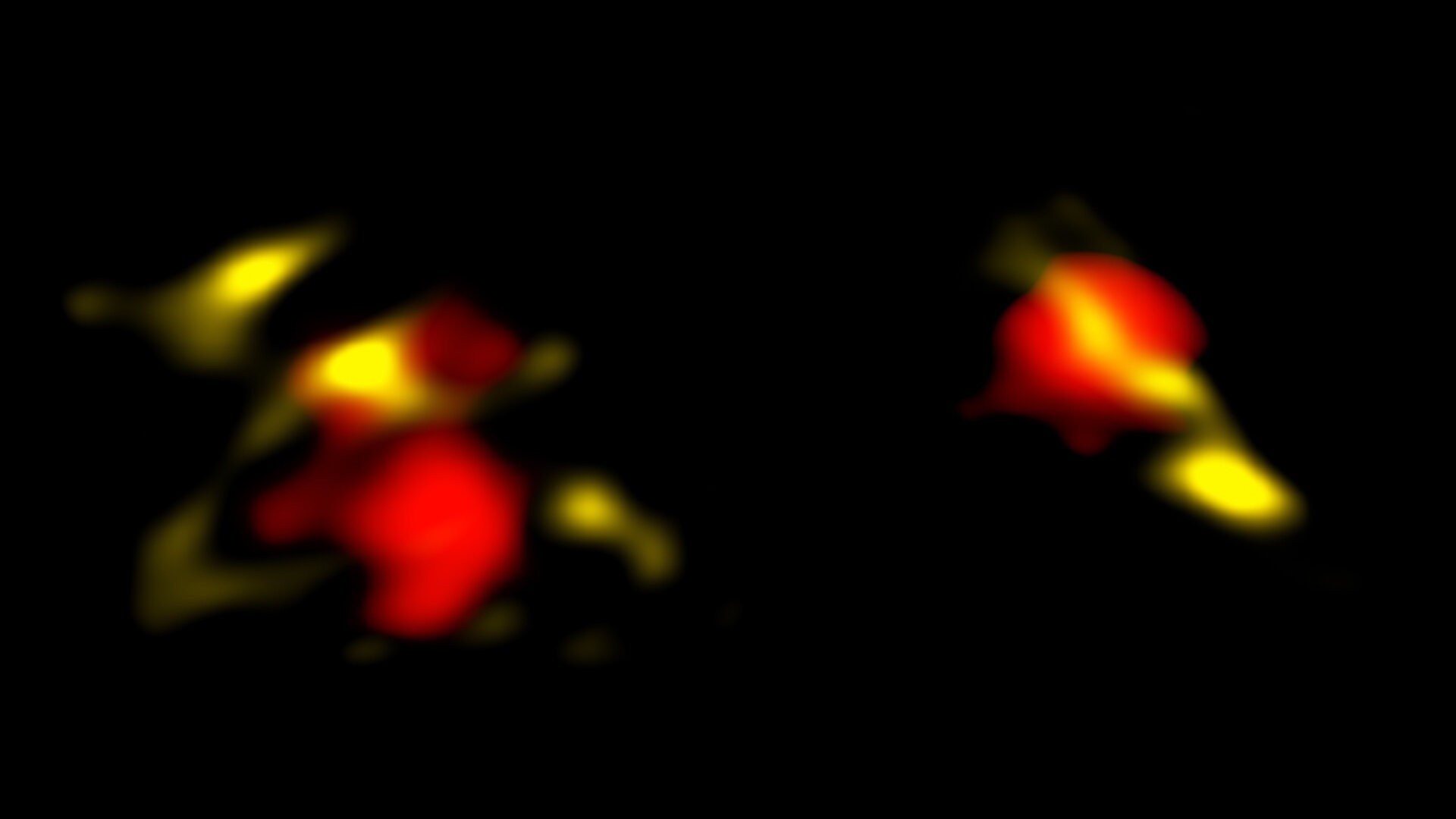
Many galaxies displayed mature structures, including early rotating disks that foreshadow spiral galaxies like the Milky Way. This is unexpected, as frequent mergers in the early Universe should have left chaotic remnants. Instead, several showed orderly evolution without visible "scars."
ALMA previously detected similar outliers, like the dusty "MAMBO-9" and the rotating "Wolfe Disk." Previously seen as rarities, Project ALPINE suggests such rapid maturation was more common, reshaping our view of early cosmic evolution.
