A team of astronomers has announced the detection of the first Jupiter-sized planet with a cloudless atmosphere. The findings are published in The Astrophysical Journal Letters.
Discovered in 2012, WASP-62b—a gas giant 575 light-years from Earth—had not undergone detailed atmospheric analysis until now. As part of her doctoral thesis at the Harvard-Smithsonian Center for Astrophysics, Munazza Alam specialized in exoplanet characterization, with a focus on atmospheric composition. WASP-62b was a key target in her research.
WASP-62b is classified as a "hot Jupiter"—a Jupiter-like planet orbiting perilously close to its star. Unlike our solar system's Jupiter, which takes about 12 years to orbit the Sun, WASP-62b completes an orbit in just 4.5 days. This proximity superheats the planet, earning it the "hot Jupiter" moniker.
Using Hubble Space Telescope spectroscopy to analyze electromagnetic radiation, Alam probed the atmosphere for key elements like sodium and potassium. While potassium showed no signs, the sodium signature was exceptionally clear, revealed through distinct absorption lines. Clouds or haze typically obscure such signals, allowing only faint traces. This vivid detection strongly suggests a cloud-free atmosphere.
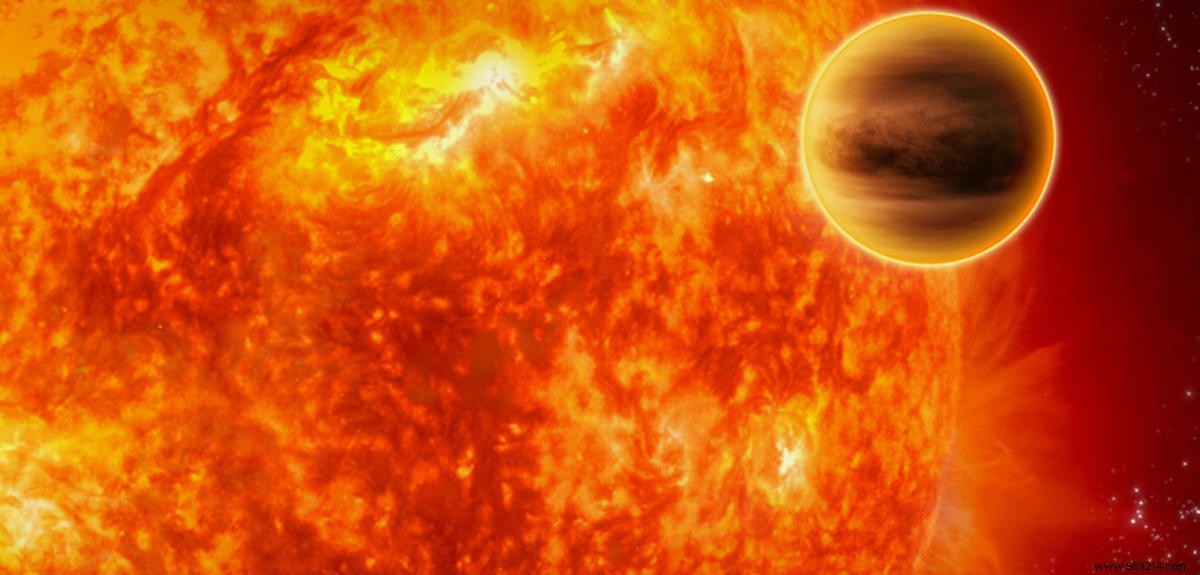
Cloudless exoplanets like WASP-62b are exceptionally rare, comprising less than 7% of known exoplanets. The only prior example, WASP-96b, was identified in 2018. These pristine atmospheres offer invaluable windows into planetary formation and chemistry.
The team anticipates using the James Webb Space Telescope (JWST), slated for launch in October, to delve even deeper into WASP-62b's atmosphere.
